
Yes, getting an appraisal for your vintage motorcycle is essential to guarantee it’s accurately valued for insurance. It helps prevent underinsuring, which could leave you vulnerable if the bike is damaged or stolen, and overinsuring, which can lead to higher premiums. A professional appraisal provides official documentation of your bike’s worth, especially after restorations or market changes. Knowing your bike’s true value ensures you’re properly protected—continue to find out why this step matters.
Key Takeaways
- An appraisal provides an accurate, official valuation to ensure appropriate insurance coverage for your vintage motorcycle.
- It helps prevent underinsuring or overpaying by aligning coverage with the bike’s true market value.
- Recent restorations or modifications make an appraisal essential to reflect current condition and market trends.
- An appraisal documentation is often required by insurance companies for claims and policy adjustments.
- Professional appraisals consider rarity, authenticity, and restoration quality, maximizing your bike’s insured value.
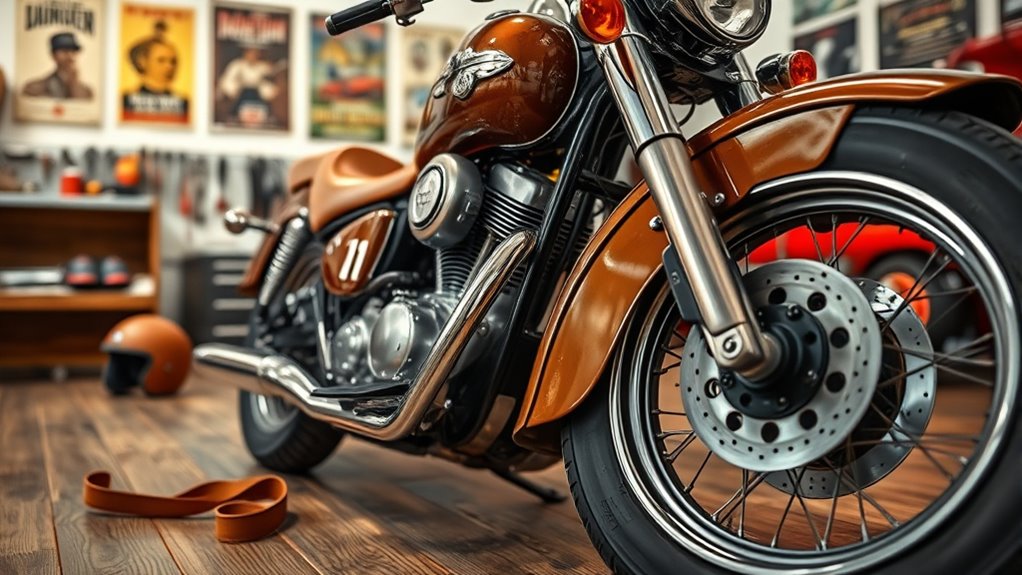
Understanding the true value of your vintage motorcycle requires more than just a glance at its age. While the year it was built offers a starting point, several other factors influence its worth, especially when it comes to insuring it properly. One of the most essential steps is determining whether you need an appraisal. Without an official valuation, you risk underinsuring, which could leave you financially vulnerable if your bike gets stolen or damaged. Conversely, overestimating its value might lead to higher premiums that aren’t justified. An appraisal provides clarity, ensuring your coverage aligns with your bike’s actual worth.
When evaluating your vintage motorcycle’s value, consider restoration costs. If your bike has been restored, the expenses involved can notably influence its market value. High-quality, authentic restorations often add to the bike’s worth, but subpar or overly expensive restorations might not yield a proportional increase in value. Understanding restoration costs helps you gauge whether the current market recognizes the effort and expense you’ve invested. This insight is essential during an appraisal, as it can justify a higher insurance value, especially if your restoration has preserved or enhanced the bike’s rarity and appeal. Additionally, color accuracy in your bike’s restoration details can impact its desirability among collectors and thus its market value.
Market fluctuations also play a key role in determining your motorcycle’s worth. The vintage motorcycle market is dynamic, with values rising and falling based on trends, collector interest, and supply and demand. For example, a classic model might surge in value when it gains popularity among collectors, only to decline if interest wanes or newer restorations flood the market. Staying updated on these fluctuations allows you to make informed decisions about your motorcycle’s valuation. An experienced appraiser will consider current market trends, ensuring your insurance coverage reflects the bike’s current worth rather than outdated estimates.
Knowing when to get an appraisal can save you money and trouble. If your motorcycle has undergone recent restoration or if market conditions have shifted, it’s wise to seek a professional opinion. An appraisal is also essential if you plan to sell or transfer ownership, giving you a clear picture of its fair value. Remember, insurance companies often require documentation from an appraiser to set accurate coverage limits. So, investing in a professional appraisal isn’t just about protecting your bike; it’s about making sure you’re adequately covered without overpaying.
Frequently Asked Questions
How Often Should I Get My Vintage Motorcycle Appraised?
You should get your vintage motorcycle appraised every 2 to 3 years to keep the valuation current. Regular appraisal timing guarantees your insurance coverage reflects its true worth, especially if market values fluctuate. Keep an eye on changes in your motorcycle’s condition or upgrades, as these can impact valuation frequency. Staying proactive with your appraisal schedule helps prevent underinsuring or overinsuring, giving you peace of mind.
Can I Use Online Tools to Estimate My Motorcycle’s Value?
Yes, you can use online assessments for a DIY valuation of your vintage motorcycle, but keep in mind they might not be entirely accurate. These tools provide a rough estimate based on current market data, condition, and rarity. While convenient, it’s wise to supplement online estimates with professional appraisals, especially for insurance purposes, to guarantee you get an accurate and thorough valuation that reflects your motorcycle’s true worth.
What Factors Most Influence a Vintage Motorcycle’s Insurance Value?
You might think market trends and rarity factors are the biggest influences on your vintage motorcycle’s insurance value, and they do matter. Recent sales, demand, and how rare your model is markedly impact its worth. However, expert appraisals often reveal other critical factors like condition, originality, and historical significance, which can elevate or lower your bike’s insured value. Always consider a professional opinion for the most accurate assessment.
Is It Necessary to Get a Professional Appraisal for Every Vintage Bike?
You don’t always need a professional appraisal for every vintage bike, but it’s wise if your motorcycle has collector significance or rarity. A professional can accurately assess its value, considering rarity and condition, which helps with insurance coverage. If your bike’s unique or valuable, investing in an appraisal ensures you’re adequately protected. For more common models, a detailed valuation might not be necessary, but it’s still worth contemplating for peace of mind.
How Do Modifications Affect My Motorcycle’s Insurance Valuation?
Modifications can substantially impact your motorcycle’s insurance valuation, especially if they affect restoration impact and originality preservation. Custom parts or upgrades might increase value if they’re well-documented and enhance performance, but they can also reduce value if they compromise originality. Always keep detailed records of any modifications, as they help insurers assess your bike’s true worth. Being transparent ensures you get accurate coverage that reflects your vintage motorcycle’s true condition and uniqueness.
Conclusion
Knowing the true value of your vintage motorcycle is like holding a lighthouse in a foggy night—it guides you through uncertain waters. Whether for insurance or peace of mind, getting an appraisal guarantees you’re not sailing blindly. Don’t let your prized possession drift into the unknown; arm yourself with knowledge. A proper valuation is your anchor, securing your investment and passion alike, so you can enjoy the ride with confidence and clarity.