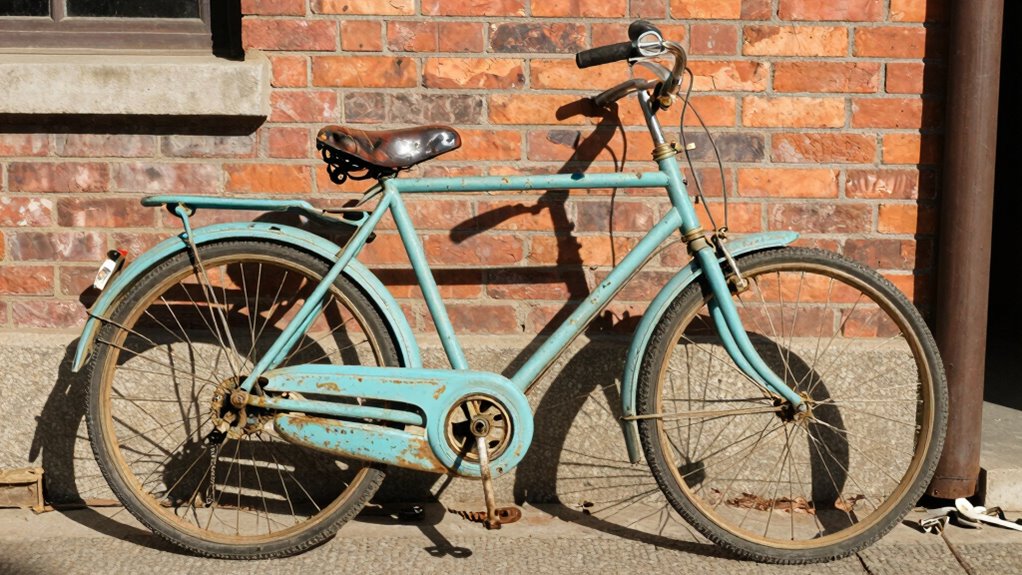

To decide if a project bike is worth saving, assess its frame for rust or cracks, as this affects costs and feasibility. Check if original parts are available and consider restoration expenses, especially for rare or vintage components. Think about the bike’s overall value, both sentimental and monetary, and how much effort it will take to restore it. If you want to learn more about making these tough decisions, keep exploring the details ahead.
Key Takeaways
- Assess the frame’s condition for rust, cracks, or structural integrity to determine if restoration is feasible.
- Evaluate the availability and cost of original or replacement parts needed for restoration.
- Consider the bike’s sentimental value and whether the investment aligns with its worth.
- Estimate restoration costs to see if they justify the bike’s potential resale or display value.
- Decide if preserving originality or updating with modern parts aligns with your restoration goals.
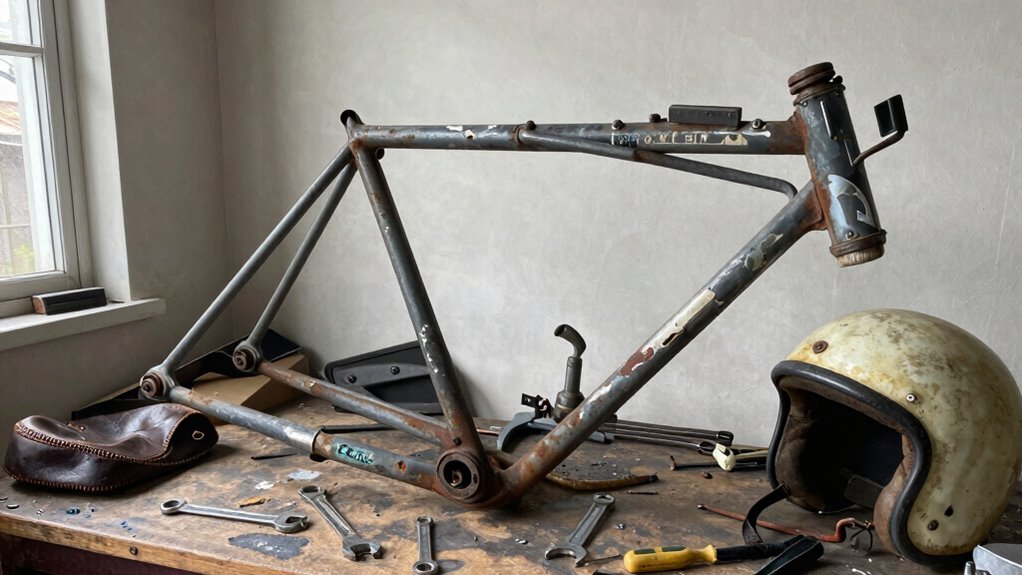
Ever wonder if that old, neglected bike is worth the effort to restore? It’s a common question for enthusiasts who stumble upon vintage frames or battered bikes gathering dust in garages. Before you embark on, it’s essential to assess whether the project bike makes financial and sentimental sense. One of the biggest factors is understanding the restoration costs involved. Restoring a bike can range from a few hundred to several thousand dollars, depending on the bike’s condition and how much work it needs. If the frame is badly rusted or cracked, repairs may be costly or even impossible. Additionally, replacing parts—especially rare or vintage components—can inflate your expenses. You want to weigh these potential costs against the bike’s value, both monetary and nostalgic. Sometimes, a bike’s worth isn’t just in its resale price but in its sentimental significance or the joy of restoring it yourself.
Another key aspect is whether you’re committed to preserving the bike’s originality. If your goal is to maintain the bike’s authentic look and feel, then you’ll need to think about how much of the original components can be saved or refurbished. Original parts often fetch higher value and appeal to collectors, but they can also be fragile or difficult to replace. Sometimes, restoring a bike to its original condition involves sourcing vintage parts, which can be hard to find and expensive. If you’re willing to accept some modern upgrades or replacement parts, you might reduce costs and simplify the process. But if maintaining authenticity is a priority, you’ll need to plan for a careful, detail-oriented restoration that respects the bike’s history. Additionally, understanding the value of vintage parts can help you determine whether restoring a bike will be financially worthwhile. Being aware of the potential for restoration can help you set realistic expectations and avoid unnecessary expenses. Knowing the availability of replacement parts can also influence your decision, especially for rare models. Considering the condition of the original frame and its suitability for restoration is crucial, as some frames may be beyond repair or less desirable to restore.
You should also evaluate the bike’s overall frame integrity and originality. A solid frame with minimal rust or damage is more likely to be worth saving, especially if it’s a sought-after model. On the other hand, a frame that’s heavily compromised may not justify the restoration costs, regardless of its aesthetic appeal. Consider how much work it will take to bring the bike back to a rideable or display-ready condition. Sometimes, the effort involved exceeds the bike’s value or your personal attachment to it. Ultimately, deciding if a project bike is worth saving comes down to balancing restoration costs, your willingness to preserve originality, and how much the bike truly means to you. If the numbers add up and your passion remains high, then it’s worth the effort. If not, it might be better to pass and look for a more promising project.

Carburetor Carb Rebuild Kit – Set of 2 – Compatible with Honda CB450 CL450 CB450K twin 1972-1974
Fits Honda: CB450K – 1972-1974 | CL450K Scrambler – 1972-1974
As an affiliate, we earn on qualifying purchases.
As an affiliate, we earn on qualifying purchases.
Frequently Asked Questions
Can a Rusty Frame Be Restored Safely?
Yes, a rusty frame can be restored safely if you thoroughly inspect the frame for structural integrity and perform rust removal carefully. Start with a detailed frame inspection to check for any weak spots or cracks caused by rust. Use appropriate rust removal techniques like sanding, chemical treatments, or wire brushing. If the frame remains solid after rust removal and inspection, you can restore it safely, ensuring it’s strong and reliable.
Is It Better to Buy a Project Bike or a New One?
Choosing the right project or buying new? It’s a no-brainer, right? You get the thrill of restoration, but beware—evaluating restoration costs can turn that dream into a nightmare. If the project bike is a well-preserved gem, it’s worth the effort. But if it’s a rust bucket, you’ll spend more time and cash than it’s worth. Sometimes, buying new saves you money, stress, and a whole lot of headaches.
How Much Should I Budget for Restoring a Project Bike?
You should budget around $500 to $2,000 for restoring a project bike, depending on its condition. Prioritize costs like bike paint for a fresh look and frame alignment to guarantee safety and performance. Unexpected expenses can arise, so it’s wise to set aside some extra funds. Carefully assess the bike’s needs first, then plan your budget accordingly to avoid surprises during the restoration process.
What Tools Are Essential for a Bike Restoration?
You’ll need essential tools like a chain whip and cassette lockring remover for drivetrain work, a torque wrench for proper bolt tightening, and brake alignment tools to make sure your brakes work safely. A chain tension gauge helps you set the right tension, preventing slips and ensuring smooth rides. Don’t forget a set of screwdrivers, pliers, and cleaning supplies. These tools make your restoration efficient and guarantee a safe, reliable bike.
How Do I Identify Hidden Damages in a Project Bike?
To identify hidden damages, start with a thorough frame inspection, checking for cracks, dents, or warping that might not be obvious. Look closely for rust removal signs, especially around welds and joints, as rust can weaken the structure over time. Use a flashlight to spot corrosion and tap gently to detect any unusual sounds indicating internal damage. Addressing these issues early helps determine if your project bike is worth saving.

Rustbuster RB7336L RBR Frame Repair Kit
As an affiliate, we earn on qualifying purchases.
As an affiliate, we earn on qualifying purchases.
Conclusion
So, next time you’re staring down a battered project bike, remember: it’s often the rust, dents, and missing parts that make it a true bargain—or a beautiful mess waiting to be revived. Ironically, what seems beyond hope might just be your next triumph. Sometimes, the real value isn’t in the shiny, perfect machine but in the story and challenge it offers. After all, isn’t that what makes a bike worth saving?
ORIONRIDE Cycling Shirts-Original Components Design,Zipper Pockets,Short Sleeves,Button Down Gravel Shirts for Biking
【Advanced Comfort】Ultra-light (76g/m²), breathable, moisture-wicking fabric ensures optimal comfort during rides.
As an affiliate, we earn on qualifying purchases.
As an affiliate, we earn on qualifying purchases.

Predator Cycling Carbon Fiber Bike Repair Kit – DIY Carbon Frame Repair Kit with 3K Twill Carbon Fabric, Epoxy Resin, Heat Shrink Tape & Video Instructions
Carbon fiber bike repair kit – Designed for cyclists, mechanics, and shops repairing small to medium cracks, chips,…
As an affiliate, we earn on qualifying purchases.
As an affiliate, we earn on qualifying purchases.