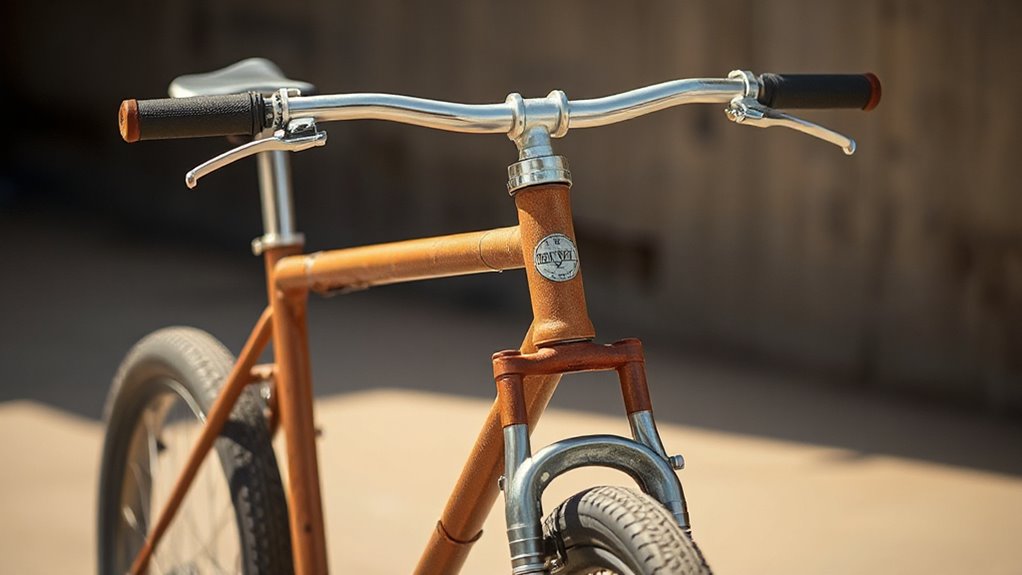

To turn a vintage frame into a rigid chopper, you need to focus on selecting the right geometry and materials. Make certain the head tube angle is slack for that laid-back look, and consider extending the top tube for a stretched feel. Steel frames are common and easy to modify, while aluminum or titanium offer lighter options. Proper adjustments keep your bike stable and stylish. If you’re curious about customizing your build further, you’ll find helpful tips below.
Key Takeaways
- Evaluate the vintage frame’s geometry to ensure it supports a laid-back chopper style with appropriate head tube angle and reach.
- Select a suitable material (steel, aluminum, titanium) based on desired weight, durability, and aesthetic, considering potential reinforcement.
- Modify the frame by adjusting or replacing the top tube, head tube, and rear stays to achieve a rigid, minimalist hardtail design.
- Customize components such as forks, handlebars, and seat for a personalized, stretched look characteristic of choppers.
- Ensure compatibility of parts and maintain frame integrity during conversion to balance style, stability, and ride quality.
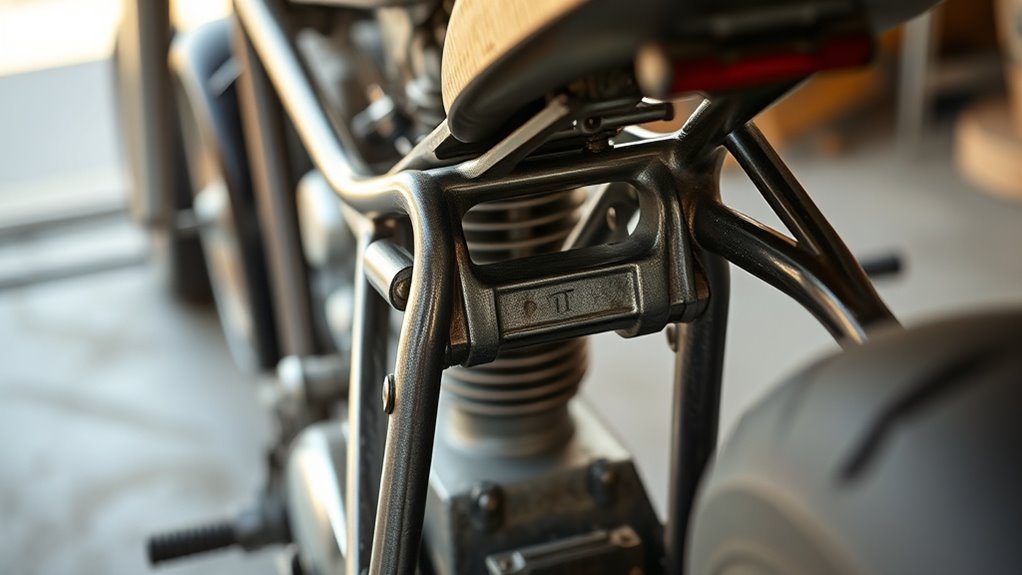
A hardtail conversion is a popular modification for mountain bikers looking to enhance their bike’s performance and customize their ride. When you’re considering turning a vintage frame into a rigid chopper, understanding the importance of frame geometry is vital. The frame’s geometry determines how your bike handles, influences stability, and affects comfort. For a chopper style, you’ll want to pay attention to the head tube angle, which should be slack enough to give that laid-back, stretched look, but still responsive enough to handle corners. The top tube length and overall frame reach are also key, as they define your riding position and influence control. A longer wheelbase, for example, offers more stability at high speeds and on rough terrain, which is often desirable in a chopper setup. By evaluating the existing geometry of your vintage frame, you can decide whether it needs modifications or if it’s suitable for a straightforward conversion. Making adjustments to the geometry might involve swapping out certain components or even considering a custom build if you want a truly unique ride. Additionally, considering the material properties of your vintage frame can help you determine the best approach for reinforcement and customization.
Material selection plays a significant role in your conversion process. Vintage frames are often made from steel, aluminum, or sometimes even titanium, each offering different benefits. Steel frames are durable, easy to work with, and have a classic look that complements a vintage aesthetic. Aluminum frames are lighter, which can improve handling and acceleration, but may require different welding techniques during the conversion process. Titanium, while less common and more expensive, offers the best strength-to-weight ratio and corrosion resistance. When choosing materials, you need to think about how they will impact the overall weight, ride quality, and durability of your chopper. If you’re aiming for a sturdy, vintage feel, steel might be your best bet. For a lighter, more modern touch, aluminum could work well. Additionally, consider the options for reinforcement or modifications—such as gussets or custom dropouts—that can enhance the frame’s strength while maintaining its original character.
In essence, your choices around frame geometry and material selection will shape the entire conversion. They guarantee that your vintage bike not only looks the part but also performs reliably as a custom rigid chopper. By carefully evaluating these factors, you can create a bike that reflects your style and riding preferences, all while respecting the integrity of the original frame. Proper planning and precise execution will turn your vintage frame into a striking, functional, and personalized ride that stands out on the trail or in the street. Knowing the benefits of different materials can help inform your decision to achieve the best balance of weight, durability, and aesthetic.
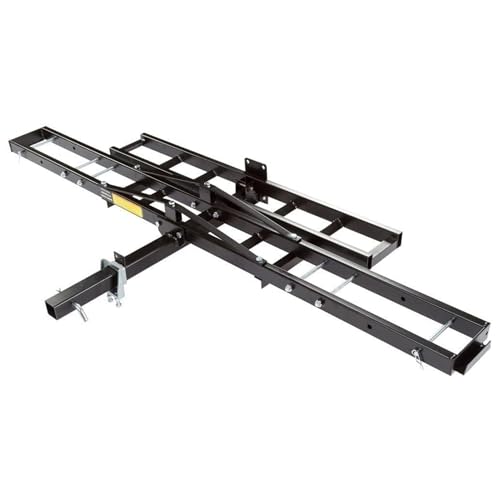
Black Widow Steel Motorcycle Carrier with Ramp for 2-Inch Receiver, 500 lb Capacity - Hitch-Mounted Dirt Bike and Scooter Hauler with Grit-Coated Track and Anti-Rattle Device for SUVs and Trucks
Versatile Bike Hauling: Transport motorcycles, dirt bikes, and scooters with ease using your Class III or IV 2-inch...
As an affiliate, we earn on qualifying purchases.
Frequently Asked Questions
What Tools Are Essential for a Hardtail Conversion?
You’ll need basic tools like a wrench set, socket set, and Allen keys for the conversion. A bike stand helps hold the frame steady. You’ll also need a saw or grinder to modify the frame if necessary, ensuring the new geometry fits perfectly. Make sure your tools are compatible with the frame’s material—steel, aluminum, or titanium—to avoid damage. Precise measurements and proper tools are key for a safe, effective hardtail conversion.
How Long Does a Typical Conversion Process Take?
A typical hardtail conversion takes around 1 to 3 days, depending on your experience and the bike’s condition. You’ll spend time on frame alignment to make certain everything fits perfectly and on paint customization to give your chopper a unique look. If you work steadily and have your tools ready, you can complete the process efficiently, but taking your time guarantees a quality finish.
Can I Convert Any Vintage Bicycle to a Hardtail?
You can’t convert any vintage bicycle to a hardtail, as frame compatibility is key. Check if your frame’s geometry and material can handle the modifications without compromising durability. You’ll also want to take into account paint finishing, since some frames may require touch-ups or repainting after conversion. If your vintage frame is suitable, a hardtail conversion can be a rewarding project, but ensure you assess compatibility carefully first.
What Safety Precautions Should I Follow During Conversion?
You should always wear protective gear like gloves, goggles, and a dust mask to stay safe during conversion. Make certain your workspace is well-ventilated, clean, and free of hazards. Keep tools organized and handle sharp or heavy parts with care. Take your time, follow manufacturer instructions, and never rush. Regularly check your safety equipment and workspace to prevent accidents and guarantee a smooth, safe conversion process.
How Much Does a Hardtail Conversion Generally Cost?
A hardtail conversion typically costs between $300 and $1,000, depending on your project’s scope and parts quality. To plan your budget effectively, consider the cost estimate for materials like the frame, forks, and welding supplies. You should also factor in tools and potential professional help. By doing budget planning early, you can make certain you have enough funds without surprises, making your transformation smoother and more affordable.
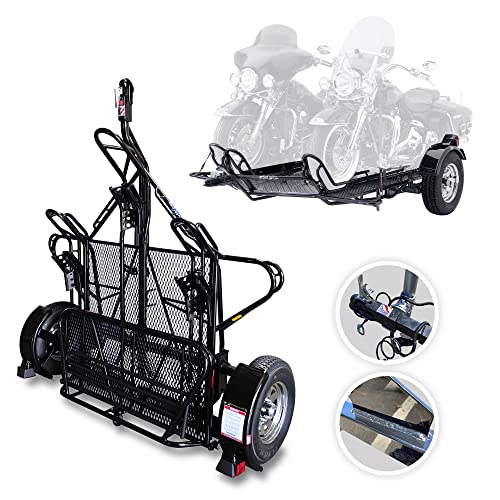
Kendon Stand Up Dirt Bike Trailer for Scooter, Sport Motorcycle, or Cargo with 1500-lb. Load Capacity and Space-Saving Vertical Storage, Push-On Loading Ramp
Multipurpose Utility and Motorcycle Trailer - A strong, versatile patented trailer from Kendon that features a fold-up, stand-up...
As an affiliate, we earn on qualifying purchases.
Conclusion
So, don’t worry if your vintage frame shows some wear—hardtail conversions breathe new life into old bikes without breaking the bank. With a bit of effort, you can create a sleek, custom chopper that turns heads. Plus, a vintage frame adds character you just can’t find in new bikes. It’s a rewarding project that combines nostalgia with modern style, proving that with a little skill, you can craft something truly unique and durable.

Black Widow Motorcycle Hitch Carrier with Wheel Chock and Loading Ramp Lightweight Aluminum 400 lb. Capacity Anti-Rattle Included Fits 2" Receiver
400 LB. CAPACITY - suitable for a single youth or adult dirt bike, motorcycle, electric bike, or fat...
As an affiliate, we earn on qualifying purchases.

Black Widow Steel Motorcycle Carrier with Ramp for 2-Inch Receiver, 600 lb Capacity - Hitch-Mounted Dirt Bike and Scooter Hauler with Grit-Coated Track and Anti-Rattle Device for SUVs and Trucks
Versatile Bike Hauling: Transport motorcycles, dirt bikes, and scooters with ease using your Class III or IV 2-inch...
As an affiliate, we earn on qualifying purchases.