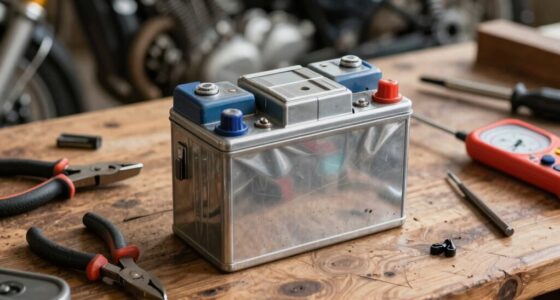
Regularly maintaining your motorcycle cables is key for smooth control and safety. Start by inspecting for wear like fraying, rust, or kinks, and check movement through the housing. Use a cable-specific lubricant to reduce friction and prevent corrosion, moving the control levers back and forth to spread it evenly. Keep cables clean and address weather exposure promptly. Staying on top of these steps helps extend cable life and keeps your bike running smoothly—continue on to learn more tips for lasting performance.
Key Takeaways
- Regularly inspect cables for wear, rust, fraying, and smooth movement.
- Use appropriate cable lubricant to reduce friction and prevent corrosion.
- Disconnect cables before applying lubricant and move levers to evenly distribute.
- Keep cables clean and address weather exposure promptly for longevity.
- Incorporate routine checks and lubrication into your motorcycle maintenance schedule.
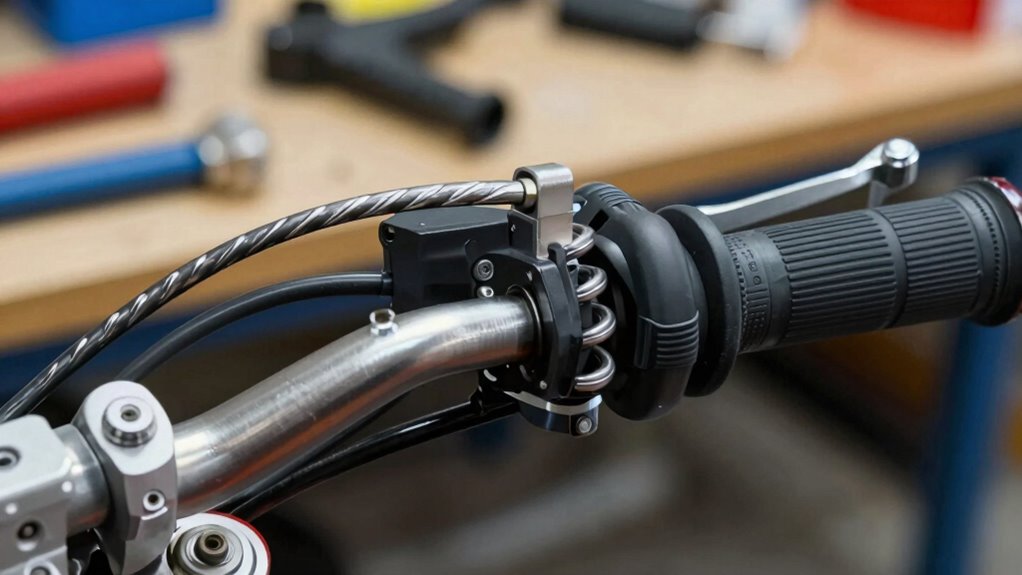
Maintaining your motorcycle cables is essential for safe and smooth riding, as they control critical functions like acceleration, braking, and clutch operation. Over time, cables can become stiff, corroded, or frayed, which hampers their performance and can compromise your safety. That’s why regular cable inspection and lubrication are key parts of your maintenance routine. When you inspect your cables, look for any signs of wear, such as fraying, rust, or kinks. Check that they move smoothly through their housings and that there’s no excessive slack or tightness. If you notice any damage or resistance, it’s time to replace or service the cables to prevent potential failure on the road. Proper maintenance practices can significantly extend the lifespan of your cables and improve overall riding safety.
Cable lubrication plays a crucial role in keeping your cables functioning properly. Dirt, grime, and moisture can accumulate inside the cable housing, making the cable stiff and difficult to operate. Applying a suitable lubricant helps reduce friction, preventing premature wear and ensuring smooth operation. To lubricate your cables, start by shifting your motorcycle into a neutral position and locating the cables—usually connected to the throttle, clutch, or brake lever. Disconnect the cable from its housing if necessary, and then use a cable-specific lubricant or a light, penetrating oil. Spray or apply the lubricant evenly along the length of the cable, working it into the housing and the inner wire. Afterward, move the control lever back and forth several times to distribute the lubricant thoroughly. This simple step can dramatically improve cable responsiveness and extend their lifespan. Regular inspection and proper lubrication are essential for maintaining cable longevity and ensuring your motorcycle remains in optimal condition. Additionally, using the correct type of lubricant designed for cables can prevent corrosion and further improve cable performance. Keeping your cables clean and well-lubricated is part of maintaining preventative maintenance, which helps avoid unexpected breakdowns. Properly caring for your cables also involves paying attention to exposure to harsh weather, which can accelerate deterioration if not addressed promptly.

Protect All Cable Life – Cable Lubricator for Bicycles/Motorcycles/Boats/Jetskis/ATVs/Snowmobiles 25006
- Versatile Cable Lubrication: Suitable for bikes, boats, ATVs, and more
- Moisture Displacement Coating: Prevents rust and corrosion with a thin film
- Easy Application: Lubricates cables without removal from housing
As an affiliate, we earn on qualifying purchases.
As an affiliate, we earn on qualifying purchases.
Frequently Asked Questions
How Often Should Motorcycle Cables Be Inspected?
You should inspect your motorcycle cables every 1,000 to 2,000 miles or monthly, especially if you ride in harsh conditions. During inspections, check for fraying, corrosion, or damage. Make sure proper cable routing and smooth cable lubrication to prevent sticking or excessive wear. Regular inspections help catch issues early, maintaining safe, responsive control. Keep cables clean, well-lubricated, and correctly routed to extend their lifespan and performance.
Can I Replace Motorcycle Cables Myself?
Yes, you can replace motorcycle cables yourself if you follow proper cable replacement tips. Start by removing the old cable, lubricate the new one with cable lubrication to guarantee smooth operation, and then install it carefully. Make sure to adjust the tension correctly and test the controls. Doing it yourself saves money and gives you a better understanding of your motorcycle’s maintenance, but always consult your manual if unsure.
What Tools Are Needed for Cable Maintenance?
You need basic tools like screwdrivers, pliers, and wrenches for cable maintenance. A cable lubrication kit is vital for smooth operation. When comparing tools, opt for quality and ease of use — for example, a cable luber makes applying lubricant easier and more even than a makeshift tool. Keep a clean cloth handy to wipe excess lubricant. This combination guarantees your cables stay in top condition and last longer.
How Do I Identify Worn or Damaged Cables?
You notice hesitation or stiffness in your controls? That’s a warning sign. Carefully inspect your cables for fraying, rust, or cracks—these indicate wear. If they feel sticky or rough despite lubrication, it’s time for cable replacement. Don’t ignore the signs; proper cable lubrication can prolong life, but damaged cables must be replaced to guarantee safety. Stay vigilant, and keep your motorcycle running smoothly.
Are Aftermarket Cables Better Than OEM Parts?
Aftermarket cables can be better than OEM parts if they offer higher aftermarket quality and fit your motorcycle perfectly. You need to check if they’re compatible with OEM specifications to guarantee proper functioning. While some aftermarket options provide enhanced durability or performance, always verify reviews and brand reputation. Ultimately, choosing a cable that matches OEM compatibility and has a solid reputation will give you reliability and peace of mind on your rides.

KOXXIAMOQ Universal Motorcycle Throttle Clutch Brake Cable Repair Kit, Road Bike Brake Shifter Cable, Bicycle Gear Cable Wire Kit Inner Replacement Set for Road Mountain Bike Motorcycle
- Premium Material: Wear-resistant, corrosion-resistant, durable
- Easy Installation: Quickly replace old or damaged cables
- Compact and Practical: Ideal for emergency roadside repairs
As an affiliate, we earn on qualifying purchases.
As an affiliate, we earn on qualifying purchases.
Conclusion
Just like a skilled conductor keeps an orchestra in harmony, your regular motorcycle cable maintenance guarantees your ride remains smooth and responsive. Think of your bike as a trusted steed, needing care to perform at its best. With simple checks and timely lubrication, you prevent issues before they start. Remember, a well-maintained cable is like a well-tuned instrument—ready to sing when you need it most. Ride confidently, knowing you’ve kept the harmony alive.
KOXXIAMOQ Universal Motorcycle Throttle Clutch Brake Cable Repair Kit, Road Bike Brake Shifter Cable, Bicycle Gear Cable Wire Kit Inner Replacement Set for Road Mountain Bike Motorcycle
- Premium Material: Wear-resistant, corrosion-resistant, durable
- Easy Installation: Quickly replace old or damaged cables
- Compact and Practical: Ideal for emergency roadside repairs
As an affiliate, we earn on qualifying purchases.
As an affiliate, we earn on qualifying purchases.

NIBBI Throttle Cable 93.5cm, Universal Replacement Motorcycle 36.8" Adjustable Throttle Cable, For Dirt Bike Pit Bike YAMAHA Kawasaki Honda Apollo Motocross
- Compatibility: Designed for all dirt bikes
- Universal Fit: Check length before purchase
- High-Quality Material: Made of durable 316 stainless steel
As an affiliate, we earn on qualifying purchases.
As an affiliate, we earn on qualifying purchases.