A good petcock is essential for your carbureted motorcycle because it controls fuel flow, guaranteeing steady and reliable engine performance. It prevents issues like fuel starvation, flooding, or leaks that can cause stalling or poor acceleration. Regular maintenance keeps it functioning properly, which extends the life of your motorcycle and ensures safety during rides and storage. Keeping your petcock in top shape makes your motorcycle run smoother and more dependable—discover more tips to keep it working right.

Get business pricing on garage and car supplies
- Business-only prices and quantity discounts
- Tax-exempt purchasing
- Multiple users, one account, clear invoices
Key Takeaways
- Ensures consistent fuel flow for reliable engine performance and prevents stalling or running lean.
- Proper regulation of fuel prevents flooding or starvation, enhancing safety during riding and storage.
- Regular maintenance of a good petcock prolongs its lifespan and prevents costly repairs.
- Controls fuel supply accurately, supporting optimal engine efficiency and longevity.
- Maintains safety by preventing fuel leaks and fire hazards during storage and operation.

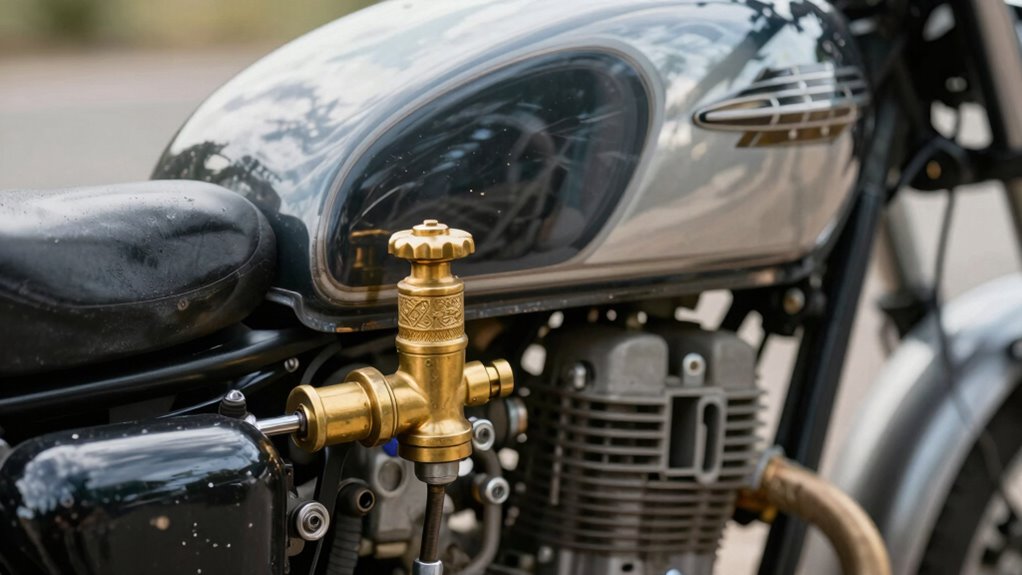
Have you ever wondered why your carbureted motorcycle runs smoothly or stalls unexpectedly? The answer often comes down to the petcock, a small but essential component that controls fuel flow from your tank to the carburetor. A good petcock ensures a steady, reliable flow of fuel, which directly impacts your motorcycle’s performance. If the petcock is faulty or worn out, you might experience inconsistent fuel delivery, causing your bike to run lean, stall, or even refuse to start. That’s why paying attention to your petcock isn’t just about maintenance — it’s about guaranteeing your bike runs at its best.
The petcock acts as a gatekeeper, regulating how much fuel enters the carburetor. When it’s functioning properly, it provides a smooth, uninterrupted flow, preventing fuel starvation or flooding. But over time, debris, sediment, or corrosion can clog the petcock, restricting fuel flow or causing leaks. These issues can lead to frustrating riding experiences, especially if your motorcycle stalls mid-ride or struggles to stay idling. Regular maintenance tips, like cleaning or replacing the petcock, help keep fuel flow consistent and prevent unexpected problems. Checking for signs of leaks or reduced fuel flow can save you from more significant repairs down the line. Proper fuel system maintenance, including inspecting the petcock, is essential for long-term reliability and safety.
A good petcock also plays an indispensable role in safety. When you shut it off during storage or maintenance, it prevents fuel leaks that could become fire hazards. When you’re ready to ride again, switching it back on ensures your carbureted system receives the right amount of fuel. This control is especially important if you switch between “on,” “reserve,” or “off” settings, giving you options for fuel management during rides or emergencies. Maintaining the petcock’s fuel flow control is crucial for safe operation and efficient fuel management.
Your motorcycle’s fuel system depends heavily on a reliable petcock. If it’s not functioning properly, fuel flow becomes unpredictable, which affects engine performance, acceleration, and efficiency. That’s why inspecting and maintaining your petcock regularly should be part of your routine. Simple maintenance tips include cleaning the filter screen, checking for corrosion, and replacing any worn seals or components. Doing so keeps the fuel flow steady and your motorcycle running smoothly. In the end, a good petcock isn’t just a small part — it’s a key factor in keeping your carbureted motorcycle reliable, safe, and performing at its best.
As an affiliate, we earn on qualifying purchases.
Frequently Asked Questions
How Often Should I Replace My Motorcycle’s Petcock?
You should replace your motorcycle’s petcock every 2 to 3 years, or if you notice fuel flow issues or leaks. Regular petcock maintenance helps prevent clogs and guarantees proper fuel flow, avoiding engine trouble. If your petcock becomes difficult to operate or shows signs of corrosion, it’s time for a replacement. Keeping your petcock in good shape guarantees smooth fuel delivery and reliable performance on every ride.
Can a Faulty Petcock Cause Engine Flooding?
A faulty petcock can indeed cause engine flooding, as it may let excess fuel flow into the carburetor drainage system, overwhelming it. When the petcock doesn’t regulate fuel flow properly, too much fuel enters, leading to flooding. This excess fuel can flood your engine, making starting difficult and risking damage. Ensuring your petcock works correctly keeps fuel flow steady and prevents unwanted carburetor drainage issues.
What’s the Difference Between Vacuum and Manual Petcocks?
Vacuum petcocks use engine vacuum to control fuel flow, opening only when the engine runs, which prevents fuel leaks when parked. Manual petcocks rely on a lever or knob you operate to open or close the valve mechanism, giving you direct control over fuel flow. The key difference is that vacuum petcocks depend on engine operation, while manual ones require you to manually manage the fuel supply, offering different levels of convenience and safety.
How Do I Identify a Leaking Petcock?
Oh, the dramatic flair of a leaky petcock! To spot it, watch for constant fuel flow even when off, or fuel pooling around the petcock or carburetor. A strong smell of gasoline is also telling. Regular petcock maintenance is key—inspect for cracks, hardened seals, or leaks. If you notice dripping, it’s time to replace or repair, ensuring your fuel flow stays controlled and your motorcycle runs smoothly.
Is It Safe to Ride With the Petcock Turned Off?
Riding with the petcock turned off isn’t safe because it stops fuel flow, risking engine stalling or damage. You should always keep it on when riding to guarantee proper fuel flow and avoid running dry unexpectedly. Regular petcock maintenance helps prevent leaks and blockages, keeping your motorcycle running smoothly. If you suspect an issue, fix or replace it promptly to maintain safe and reliable operation.
carbureted motorcycle fuel petcock
As an affiliate, we earn on qualifying purchases.
As an affiliate, we earn on qualifying purchases.
Conclusion
You see, a good petcock is like a trusty gatekeeper for your motorcycle’s fuel. When I neglected mine once, I ended up stranded on a quiet road, waiting for a tow. That experience taught me that even small parts matter—they keep your ride smooth and reliable. Just as a weak link can break a chain, a quality petcock keeps your engine running strong. Don’t underestimate its importance; it’s the simple fix that saves you from bigger hassles.
As an affiliate, we earn on qualifying purchases.
As an affiliate, we earn on qualifying purchases.
Columbus Day / Indigenous Peoples' Day Picks
long weekend sales
As an affiliate, we earn on qualifying purchases.