
TL;DR

Get business pricing on garage and car supplies
- Business-only prices and quantity discounts
- Tax-exempt purchasing
- Multiple users, one account, clear invoices
Tesla has announced a new ‘Accordion’ design for its Supercharger stations, promising instant commissioning and rapid deployment. This innovation could significantly accelerate EV charging infrastructure expansion, though details remain preliminary.
Tesla has introduced a new ‘Accordion’ design for its Supercharger stations, claiming that this innovation will allow for instant commissioning and rapid deployment of charging infrastructure. The company states that this technology could significantly reduce setup times, enabling faster expansion of EV charging networks in various locations. The announcement has generated considerable interest among industry analysts and EV advocates, as it promises to address longstanding bottlenecks in charging infrastructure development.
The core feature of Tesla’s ‘Accordion’ Superchargers is a modular, flexible design that can be deployed quickly without extensive site preparation. According to Tesla, this design allows for plug-and-play installation, with stations becoming operational almost immediately after arrival. While Tesla has not yet released detailed technical specifications, sources suggest that the system employs pre-assembled components that can be expanded or reconfigured on-site, reducing construction time from weeks to hours.
Industry experts note that traditional Supercharger station deployment often involves lengthy permitting, construction, and commissioning phases, which can delay infrastructure rollout by months. Tesla’s new approach aims to eliminate these delays by enabling a more adaptable, scalable solution that can be installed in a range of environments, from urban centers to remote areas. Tesla has not provided a specific timeline for commercial rollout, but the announcement indicates that pilot projects could begin within the next few months.
Potential Impact on EV Charging Expansion
If Tesla’s ‘Accordion’ Superchargers perform as claimed, this innovation could dramatically accelerate the expansion of EV charging infrastructure worldwide. Faster deployment means more charging stations in less time, which is critical for supporting the growing number of electric vehicles on the road. This could also influence other industry players to adopt similar modular, rapid-installation approaches, potentially reshaping the EV charging landscape and reducing infrastructure bottlenecks that currently hinder EV adoption.
Products Worth Considering
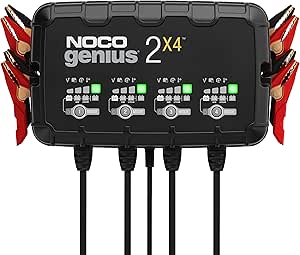
NOCO GENIUS2X4 6V/12V Four-Bank Battery Charger and Maintainer

Nextbase 222X Front and Rear Dash Cam

DEWALT 20V MAX XR Cordless 1/2-Inch Impact Wrench Kit (DCF900P1)
As an affiliate, we earn on qualifying purchases.
Background on Supercharger Deployment Challenges
Tesla’s Supercharger network has been a key factor in the company’s EV sales growth, but expanding this infrastructure has faced logistical hurdles. Traditional station deployment involves site selection, permitting, construction, and commissioning, often taking several months. As EV adoption accelerates globally, the need for faster, more flexible charging solutions has become urgent. While other companies have experimented with modular chargers, Tesla’s announcement of an ‘Accordion’ design marks a notable shift toward rapid, scalable deployment methods. Industry interest in modular infrastructure has been rising, driven by the demand for quick expansion in urban and rural areas alike.
Details on Technical Specifications and Deployment Timeline
While Tesla’s announcement is promising, specific technical details about the ‘Accordion’ Superchargers remain undisclosed. It is not yet clear how the modular components will perform under real-world conditions, or how quickly stations can be fully operational after arrival. Additionally, the exact timeline for commercial deployment, including pilot projects and broader rollout, has not been confirmed. Industry analysts are watching for further technical disclosures and field tests to assess feasibility and scalability.
Next Steps for Tesla and Industry Watchers
Tesla is expected to release more detailed specifications and pilot project updates in the coming months. Industry observers will be monitoring initial deployment results, as well as regulatory and permitting processes that could influence rollout speed. Competitors may also explore similar modular approaches, potentially leading to a shift in infrastructure development strategies across the EV industry. Tesla’s ability to demonstrate real-world performance and scalability will be critical in determining the impact of this innovation.
Key Questions
What exactly is the ‘Accordion’ Supercharger design?
The ‘Accordion’ Supercharger is a modular, flexible charging station design that can be rapidly assembled and deployed, allowing for near-instant commissioning after arrival.
When will these new Superchargers be available to the public?
Tesla has not provided a specific release date, but pilot projects are expected to start within the next few months, with broader deployment potentially following shortly after.
How does this innovation compare to traditional Supercharger deployment?
Traditional deployment involves lengthy site preparation, permitting, and construction, often taking months. The ‘Accordion’ design aims to reduce this to hours by using pre-assembled, plug-and-play components.
Could this approach be adopted by other EV charging providers?
Potentially, if Tesla’s pilot projects demonstrate success, other companies may explore similar modular, rapid-deployment solutions to accelerate their network expansion.
Are there any limitations or risks associated with this new design?
Details on durability, performance under various conditions, and long-term scalability are still unavailable. Further testing will clarify these aspects.
Source: rss