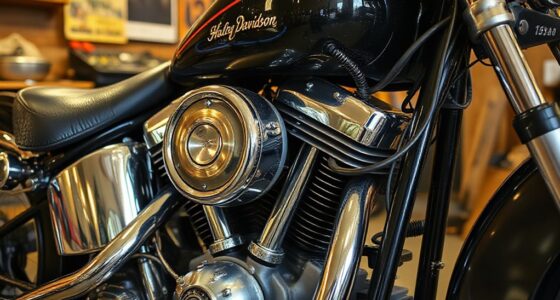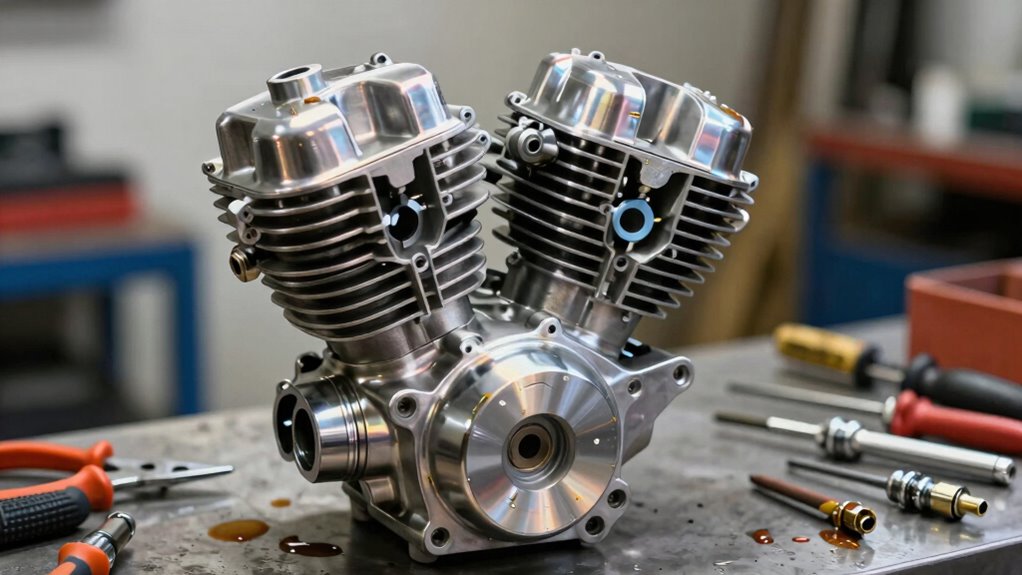

Before restoring your two-stroke motorcycle, you need to thoroughly inspect the piston, rings, and cylinder for wear, cracks, or damage. Check the engine’s internal components like the crankshaft, seals, and gaskets, replacing worn parts to prevent leaks and guarantee good compression. Handle everything carefully to avoid contamination, and carefully reassemble, double-checking timing and alignment. Paying close attention now will set a solid foundation for a reliable rebuild—continue to discover what else you should consider.

Get business pricing on garage and car supplies
- Business-only prices and quantity discounts
- Tax-exempt purchasing
- Multiple users, one account, clear invoices
Key Takeaways
- Conduct a thorough piston and cylinder inspection to identify wear, scoring, or cracks before rebuilding.
- Check engine seals, gaskets, and internal components for damage or deterioration.
- Maintain cleanliness and prevent debris entry during disassembly and reassembly.
- Verify proper timing, alignment, and lubrication to ensure smooth engine operation.
- Replace worn parts and seals to ensure optimal compression and prevent leaks.

Another vital step is inspecting the piston thoroughly. The piston is central to the engine’s power cycle, and any signs of damage or wear can compromise the motorcycle’s performance. When you remove the cylinder head, carefully examine the piston crown for scoring, pitting, or cracks. Check the piston rings for wear or breakage, as worn rings reduce compression and power. Measure the piston diameter and compare it to the specifications—if it’s out of tolerance, replacing the piston might be necessary. Pay close attention to the piston pin and its bore, ensuring they’re free of excessive play. A detailed piston inspection helps you determine whether the engine needs a rebuild or if it can be reused after cleaning and minor adjustments. Taking the time to do this correctly prevents future failures and saves you from costly repairs down the line. Additionally, understanding the importance of engine components and their condition is crucial for a successful restoration. Proper handling and inspection of these engine parts can prevent contamination and damage during reassembly. Regularly checking for wear and tear in engine parts can help identify potential issues early, avoiding more extensive repairs later on. It’s also beneficial to familiarize yourself with fluid management practices to ensure all lubricants and fuels are in optimal condition before reassembling. Ensuring proper lubrication during reassembly can extend the lifespan of the engine and improve overall performance.
Beyond the piston, consider the overall condition of the engine components, including the crankshaft, seals, and gaskets. Restoring a two-stroke isn’t just about fixing superficial issues; it’s about guaranteeing the internal parts are in good shape. When handling the piston and inspecting the cylinder, always keep cleanliness in mind; dirt or debris can cause significant damage if it enters the engine during reassembly. Additionally, replacing worn-out seals and gaskets is essential to prevent oil leaks and maintain proper compression.
When it’s time to reassemble, double-check the timing and alignment, especially if you’ve removed the flywheel or other key components. Proper timing ensures the engine fires correctly and runs smoothly. Restoring a two-stroke motorcycle demands patience, attention to detail, and a good understanding of the engine’s mechanics. By focusing on the fuel mixture and piston inspection early in the process, you set a solid foundation for a successful rebuild and a bike that runs reliably for years to come.
two-stroke motorcycle piston kit
As an affiliate, we earn on qualifying purchases.
As an affiliate, we earn on qualifying purchases.
Frequently Asked Questions
What Are the Common Signs Indicating a Two-Stroke Engine Needs Restoration?
You’ll notice signs like difficulty starting, poor acceleration, or excessive smoke, which indicate your two-stroke engine needs an engine overhaul. If your bike stalls frequently or runs unevenly, it’s time for carburetor cleaning and possible internal repairs. Increased exhaust smoke, loss of power, or strange noises also point to worn parts. Addressing these issues early guarantees your engine runs smoothly and extends its lifespan.
How Do I Choose the Right Replacement Parts for My Two-Stroke Motorcycle?
You might think matching parts by size is enough, but it’s not. The truth is, choosing the right replacement parts means checking compatibility with your engine’s fuel mixture and piston wear. Always verify manufacturer specs, use original or high-quality aftermarket parts, and make sure they’re designed for your motor’s make and model. This guarantees peak performance and longevity, preventing costly issues caused by incompatible or low-quality replacements.
What Safety Precautions Should I Take During the Restoration Process?
You should wear safety goggles, gloves, and a mask to protect yourself from fuel fumes and exhaust emissions during restoration. Work in a well-ventilated area to prevent inhaling harmful gases. Keep a fire extinguisher nearby, especially when handling fuel mixture components. Disconnect the spark plug before working on the engine to avoid accidental starting, and handle all parts carefully to prevent injury or damage while restoring your two-stroke motorcycle.
How Long Does a Typical Two-Stroke Motorcycle Restoration Take?
A typical two-stroke motorcycle restoration takes about 20 to 40 hours, but it varies based on your experience and the bike’s condition. You’ll spend time on engine tuning and adjusting the fuel mixture for peak performance. Expect to allocate extra time for cleaning, replacing worn parts, and fine-tuning the carburetor. Patience and attention to detail will help you finish faster and guarantee your bike runs smoothly.
Can I Restore a Two-Stroke Engine Without Professional Tools?
Restoring a two-stroke engine without professional tools is possible, but challenging. Did you know that over 60% of DIY engine overhauls succeed with basic tools? You can perform tasks like adjusting the fuel mixture and cleaning components, but for an engine overhaul, specialized tools guarantee safety and precision. Without them, you risk damaging parts or compromising performance, so weigh your skills carefully before attempting complex repairs.
As an affiliate, we earn on qualifying purchases.
Conclusion
Restoring a two-stroke motorcycle can be a rewarding challenge, but it requires patience, knowledge, and attention to detail. Remember, “A penny saved is a penny earned,” so take the time to do it right, and you’ll enjoy a machine that runs smoothly and reliably. Be prepared for the journey ahead, learn from each step, and trust your skills. With dedication, you’ll revive your bike and keep the spirit of riding alive.
As an affiliate, we earn on qualifying purchases.
As an affiliate, we earn on qualifying purchases.
Fall Picks
fall essentials
As an affiliate, we earn on qualifying purchases.