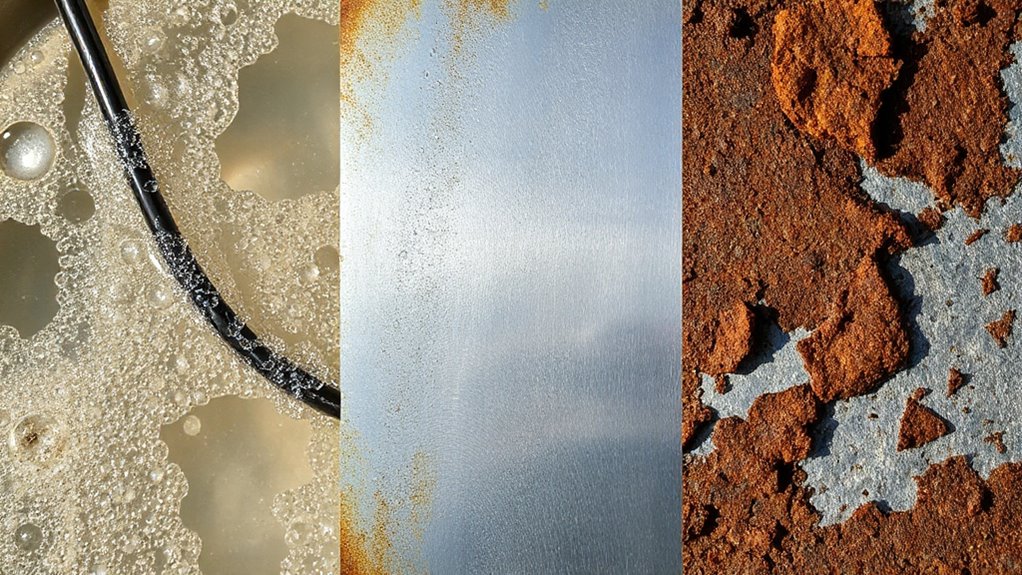

To remove rust effectively, you can use various techniques like electrolysis, chemical dips, or mechanical methods. Electrolysis involves immersing the object in a water-electrolyte solution and applying electric current, which converts rust back into metal. Chemical dips use acids or chelating agents to dissolve rust without abrasion, ideal for delicate parts. Mechanical methods like sanding or wire brushing are quick for surface rust. Want to discover which solution fits your project? Keep exploring the options.

Get business pricing on garage and car supplies
- Business-only prices and quantity discounts
- Tax-exempt purchasing
- Multiple users, one account, clear invoices
Key Takeaways
- Mechanical methods like sanding and wire brushing are effective for light rust but may damage delicate surfaces.
- Chemical rust removers with acids or chelating agents dissolve rust without abrasive damage, suitable for intricate parts.
- Electrolysis uses electric current in a water bath to convert rust back into metal, ideal for complex or valuable items.
- Proper rust removal maintains metal integrity, prevents further corrosion, and extends the lifespan of tools and objects.
- Selecting the appropriate technique depends on rust severity, metal type, and the delicacy of the item.
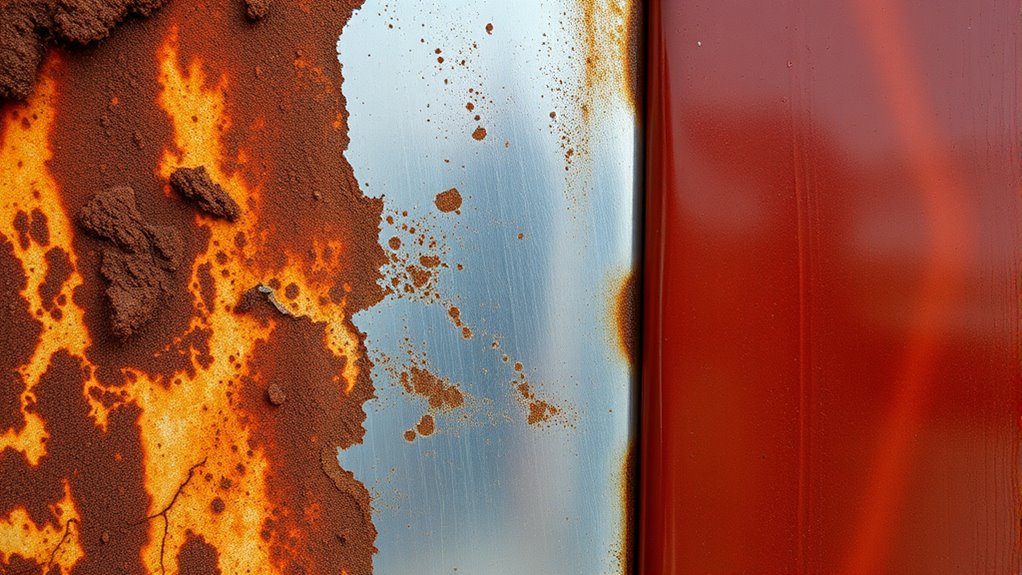
Rust can quickly tarnish metal surfaces, but removing it doesn’t have to be complicated. Whether you’re restoring an antique or maintaining tools, understanding proper rust removal techniques is vital. Before tackling the rust itself, it’s important to focus on rust prevention. Regular rust inspection helps you catch early signs of corrosion, enabling you to address issues before they worsen. By inspecting your metal surfaces periodically, you can identify vulnerable spots and apply protective coatings or rust inhibitors to keep moisture and oxygen at bay. This proactive approach reduces the need for aggressive removal methods later on.
Regular inspection and protective coatings prevent rust before it starts.
When you notice rust starting to form, choosing the right removal technique depends on the extent of corrosion and the type of metal involved. For light surface rust, mechanical methods like sanding or wire brushing work well. These techniques are quick and straightforward, allowing you to scrub away the rust layer without damaging the underlying metal. For larger or more delicate surfaces, consider using chemical rust removers. These products contain acids or chelating agents that dissolve rust without abrasive action, making them suitable for intricate parts or thin metals. Always follow safety instructions and wear gloves and eye protection when applying chemicals.
Electrolysis is a highly effective method for removing rust, especially from complex or valuable items. It involves immersing your rusted object in a solution of water and an electrolyte like washing soda, then passing an electric current through it using a battery charger or power supply. As electricity flows, rust particles are converted back into metal, effectively reversing the corrosion process. This method is gentle and preserves delicate details, but it requires some setup and patience. It’s especially useful when other methods might cause further damage or when dealing with heavily rusted components that need thorough cleaning. Proper rust removal techniques are essential for maintaining the integrity and appearance of your metal objects.
As an affiliate, we earn on qualifying purchases.
Frequently Asked Questions
Can Rust Removal Methods Damage Delicate or Antique Items?
Yes, rust removal methods can damage delicate or antique items if you’re not careful. Using gentle cleaning and proper preservation techniques helps protect these valuables. For fragile pieces, avoid harsh chemicals or aggressive scrubbing, and instead opt for soft brushes or specialized rust removers designed for antiques. Always test a small area first, and consult preservation experts if you’re unsure. This way, you can remove rust without risking damage.
How Long Does Each Rust Removal Technique Typically Take?
Imagine watching rust fade away like dawn breaking at sunrise. The time estimates for each rust removal technique vary: electrolysis can take a few hours to overnight, chemical dips might need 30 minutes to several hours, and sanding or polishing could last from minutes to a few hours depending on rust severity. The process durations depend on rust thickness, method chosen, and the item’s delicacy.
Are There Environmentally Friendly Rust Removal Options?
Yes, there are eco-friendly solutions for rust removal. You can use biodegradable options like vinegar, lemon juice, or baking soda, which are safe for the environment and effective for light rust. These methods avoid harmful chemicals and produce minimal waste. By choosing eco-friendly solutions, you protect the planet while maintaining your metal items, ensuring your rust removal process is both safe and sustainable.
What Safety Precautions Should I Follow During Chemical Dips?
When using chemical dips, you should always wear protective gear like gloves, goggles, and a mask to shield your skin, eyes, and lungs from harmful fumes. Make certain proper ventilation in your workspace to prevent inhaling toxic vapors. Follow the manufacturer’s instructions carefully, and work in a well-ventilated area or outdoors. Never mix chemicals unless specified, and wash your hands thoroughly afterward to stay safe.
Can Rust Reappear After Using Electrolysis or Chemical Treatments?
Rust can reappear after electrolysis or chemical treatments if you don’t follow proper prevention techniques. To avoid rust reappearance, clean and dry the metal thoroughly, apply a protective coating, and store it in a dry environment. Some might think these methods are enough, but without proper maintenance, rust can return. Regular inspections and reapplication of protective layers are key to ensuring long-lasting rust prevention.
As an affiliate, we earn on qualifying purchases.
Conclusion
Now that you know these rust removal methods, the question is—are you ready to tackle that stubborn corrosion? Whether you choose electrolysis or a chemical dip, each technique has its own secrets to reveal. But remember, some rust spots hide surprises beneath the surface. So, what’s your next move? Plunge in, experiment, and uncover the hidden stories your metal objects have been waiting to tell. The rust’s fate is in your hands.
As an affiliate, we earn on qualifying purchases.
As an affiliate, we earn on qualifying purchases.
Fall Picks
fall essentials
As an affiliate, we earn on qualifying purchases.