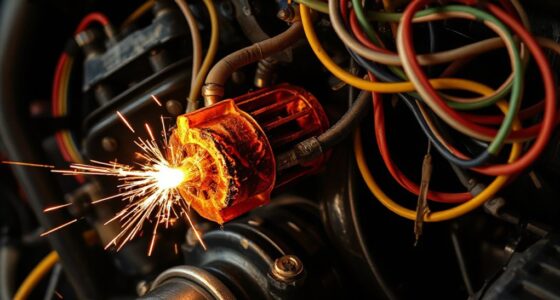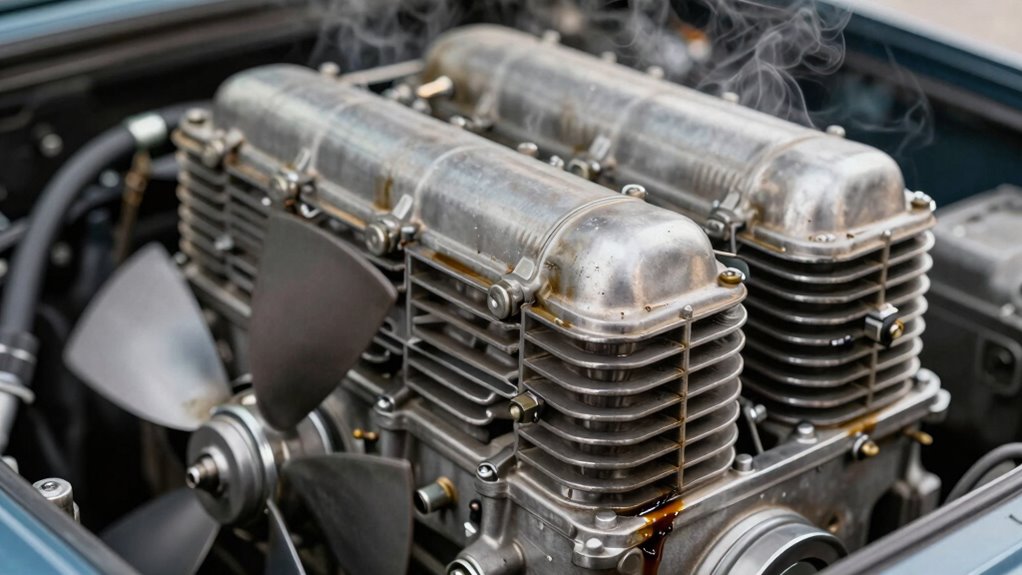

If your air-cooled engine is overheating, check if airflow across the fins is clear and functioning properly. Clean dirt or debris from fins and vents, and guarantee your cooling fan is working correctly. Also, inspect the air filter, coolant system, thermostat, and water pump for issues. Adjust the fuel mixture for peak combustion, maintain oil levels, and prevent contamination. Keep these components in check, and you’ll uncover more tips to keep your engine cool.
Key Takeaways
- Inadequate airflow due to dirty or bent fins, blocked vents, or debris reduces heat dissipation.
- Dirty or clogged air filters restrict airflow, causing engine temperatures to rise.
- Malfunctioning cooling fan or faulty water pump impairs proper heat removal.
- Improper fuel mixture (too lean or too rich) increases combustion temperature, leading to overheating.
- Damaged or worn cooling fins, hoses, or fan components hinder effective engine cooling.
Check and Maintain Proper Airflow Across Engine Fins
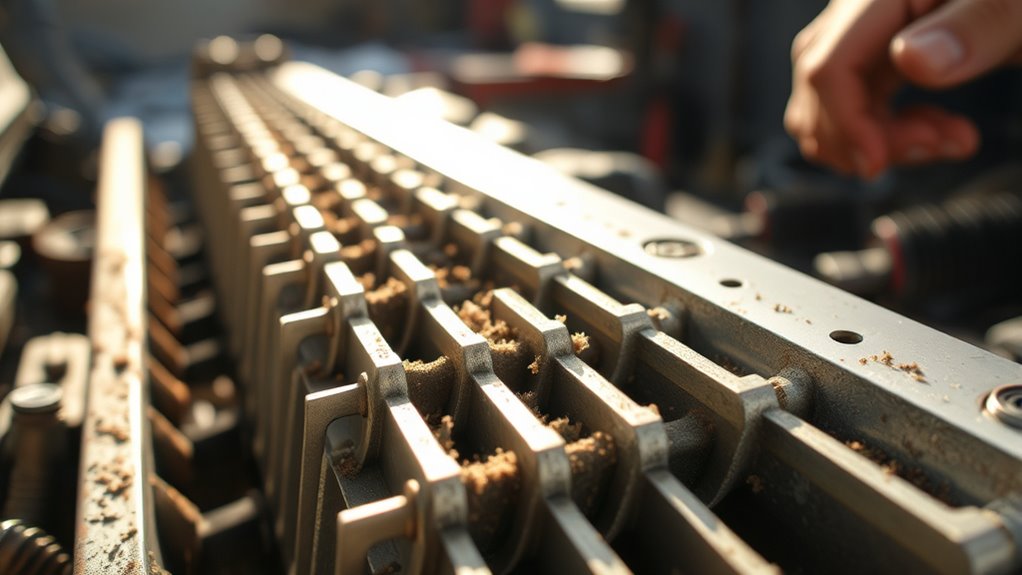
To guarantee your air-cooled engine stays cool, you need to regularly check and maintain proper airflow across its fins. Start by inspecting the fins for dirt, debris, or obstructions that can block airflow. Use a soft brush or compressed air to clean dust and debris from between the fins, ensuring nothing hampers heat dissipation. Make sure the fins are straight and undamaged, as bent or broken fins reduce efficiency. Keep the surrounding area clear of debris, leaves, or other objects that could obstruct airflow. Proper airflow allows heat to escape effectively, preventing overheating. Additionally, routine maintenance of the cooling system components can identify potential issues before they lead to overheating. Regular inspection of the cooling system components can identify potential issues before they lead to overheating. Ensuring the engine has good ventilation is essential for optimal cooling performance, which can be supported by ventilation considerations to prevent heat buildup. Maintaining airflow pathways and ensuring nothing blocks airflow is vital for your engine’s cooling performance and longevity. Implementing proper airflow management strategies can further enhance heat dissipation and prevent engine overheating.
Inspect and Replace Clogged or Dirty Air Filters
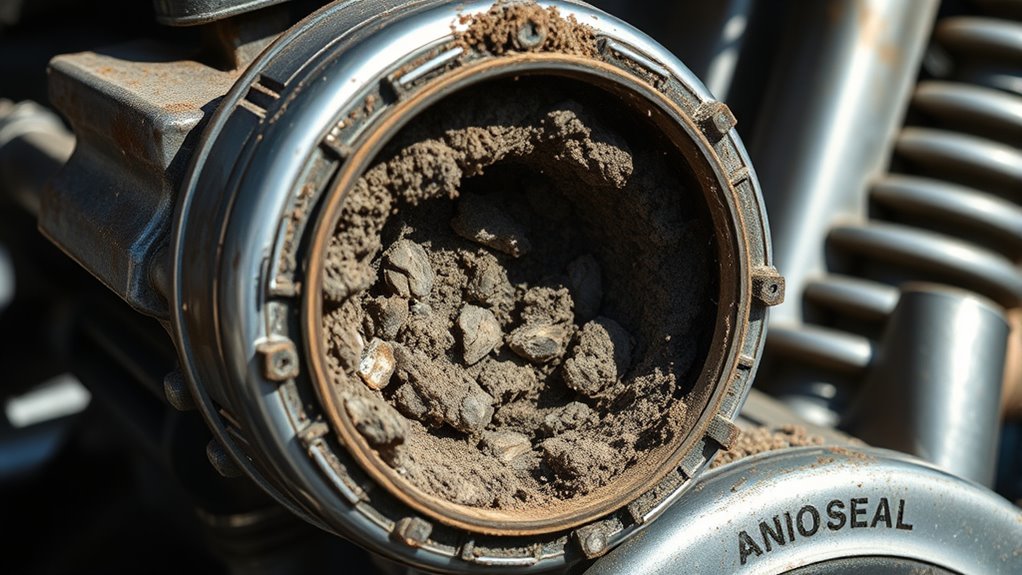
If you notice your engine running hotter than usual, check the air filter for dirt or clogs. A dirty filter restricts airflow, causing internal temperatures to rise and risking overheating. Regular inspection and timely replacement keep airflow clear and your engine running cool. Additionally, ensuring proper airflow management within the engine compartment can prevent heat buildup and improve cooling efficiency. Proper air circulation is essential for maintaining optimal engine temperature and preventing overheating issues. Incorporating innovative cooling techniques can further enhance the engine’s ability to dissipate heat effectively, supported by advanced cooling technology that improves overall thermal regulation. Maintaining correct coolant flow and circulation also contributes significantly to effective heat dissipation and engine longevity.
Signs of Blocked Filters
Blocked or dirty air filters can substantially impair your engine’s cooling performance, especially in air-cooled engines that depend on effective airflow across fins to dissipate heat. When filters clog, you’ll notice your engine running hotter than normal, often leading to overheating. You might see reduced engine power, sluggish acceleration, or difficulty starting the engine. Additionally, increased exhaust smoke or a noticeable drop in fuel efficiency are signs of restricted airflow. If you feel vibrations or hear unusual noises during operation, it could also indicate airflow issues caused by a clogged filter. Regularly inspecting your air filter helps catch these signs early, preventing further overheating and ensuring your engine stays cool. A lack of proper airflow can significantly impact engine performance and longevity. Ensuring your filters are free of debris is essential for maintaining optimal engine cooling and preventing damage. Proper airflow management is a key part of engine maintenance, especially in air-cooled systems. Routine inspection is crucial to identify and address airflow restrictions before they cause severe engine problems. If you observe any of these symptoms, it’s time to clean or replace your filter. Additionally, understanding air filtration systems can help you better maintain your engine’s health and efficiency.
Proper Filter Maintenance
Regularly inspecting your air filter is essential for maintaining peak engine cooling, especially in air-cooled systems that depend on unobstructed airflow. A dirty or clogged filter restricts airflow, causing the engine to overheat. Check your filter frequently, especially if you drive in dusty or polluted environments. Replace it if it appears dirty or damaged to guarantee maximum heat dissipation. Proper maintenance prevents excessive engine temperatures and extends component life. Use the table below to identify filter issues and their solutions:
| Issue | Cause | Solution |
|---|---|---|
| Filter looks dirty | Accumulated dust and debris | Replace or clean filter |
| Reduced airflow | Clogged filter | Replace filter |
| Visible damage | Tears or holes | Replace immediately |
Maintaining a clean filter keeps airflow at its best, reducing overheating risks. Regular inspections help catch problems early before they lead to engine damage. Additionally, ensuring your air filtration system is properly maintained enhances overall cooling efficiency.
Ensure Adequate Cooling Fan Operation and Functionality

Ensuring your cooling fan operates properly is essential for preventing engine overheating in air-cooled systems. You should regularly check that the fan spins freely and engages when the engine reaches a certain temperature. Listen for unusual noises or vibrations that could indicate a failing motor or loose belt. Inspect the fan blades for cracks or debris that could hinder airflow. Verify that the fan switch or temperature sensor activates the fan at the correct temperature. If the fan isn’t turning on when needed, test the electrical connections and replace any faulty relays or wiring. Proper fan operation ensures consistent airflow across engine fins, helping dissipate heat effectively. Additionally, understanding the application of fan types and maintenance routines can prolong the lifespan of your cooling system. Regular maintenance of the fan system is crucial to keep your engine running cool and avoid costly damage. Incorporating fan efficiency checks as part of routine maintenance can further optimize cooling performance and prevent unexpected failures. Recognizing the importance of airflow in engine cooling can guide you in troubleshooting and ensuring optimal fan functionality. Maintaining clean and unobstructed airflow pathways is also vital for maximum cooling efficiency. Furthermore, keeping cooling system components well-maintained can prevent blockages that reduce airflow and lead to overheating.
Monitor and Adjust Air-Fuel Mixture for Optimal Combustion
You need to regularly check your carburetor settings to make certain the air-fuel mixture is balanced. Adjusting the idle mixture can help prevent your engine from running too hot or too lean. Properly tuning these settings keeps combustion efficient and reduces overheating risks.
Adjust Idle Mixture
Adjusting the idle mixture is essential for maintaining ideal engine performance and preventing overheating. If the mixture is too rich, excess fuel causes higher combustion temperatures, risking engine stress. Too lean, and the engine runs hotter due to incomplete combustion. To fine-tune it, use a screwdriver to turn the idle mixture screw gradually, observing engine response. A balanced mixture ensures smoother operation and reduces the likelihood of engine knocking. Imagine this process visually:
| Rich Mixture | Perfect Balance | Lean Mixture |
|---|---|---|
| Excess fuel | Smooth idle | Insufficient fuel |
| Black smoke | Stable temperature | Engine stalls |
| Cold start | Optimized performance | Hesitation |
Balancing the mixture ensures efficient combustion, minimizes heat buildup, and keeps your air-cooled engine running cool and reliable. Recognizing the importance of engine tuning techniques can also enhance your understanding of engine maintenance. Monitoring for passive voice can also help improve clarity and engagement in your adjustments. Properly adjusting the mixture is a fundamental part of engine cooling strategies to prevent overheating issues.
Check Carburetor Settings
Checking the carburetor settings is key to maintaining the proper air-fuel mixture for ideal combustion and preventing overheating. If the mixture is too rich, excess fuel causes incomplete combustion, generating more heat and risking engine damage. If it’s too lean, insufficient fuel leads to higher combustion temperatures, also risking overheating. Start by inspecting the mixture screws and adjusting them according to your engine’s specifications. Use a tachometer to monitor engine speed and ensure proper idle. Listen for rough running or misfires, which indicate incorrect settings. Make small adjustments, then test drive to observe engine temperature and performance. Proper carburetor tuning promotes efficient fuel burning, reduces heat buildup, and helps keep your engine cool during operation.
Regularly Clean and Clear External Cooling Fins and Vents

Regularly cleaning and clearing external cooling fins and vents is essential for maintaining ideal airflow around the engine. Dirt, dust, and debris can quickly accumulate on fins and vents, blocking airflow and trapping heat. Use a soft brush or compressed air to remove buildup without damaging the fins. Ensure vents are free of obstructions like leaves or dirt that could restrict airflow. Keeping these surfaces clean improves heat dissipation and helps prevent overheating during operation. Inspect fins and vents often, especially after dusty or humid conditions. Avoid using harsh chemicals that could corrode or damage the fins. Proper maintenance of these external parts guarantees maximum cooling efficiency, reduces engine temperature, and prolongs your engine’s lifespan. Remember, a clean engine runs cooler and performs better.
Inspect and Repair Damaged or Blocked Cooling Hoses
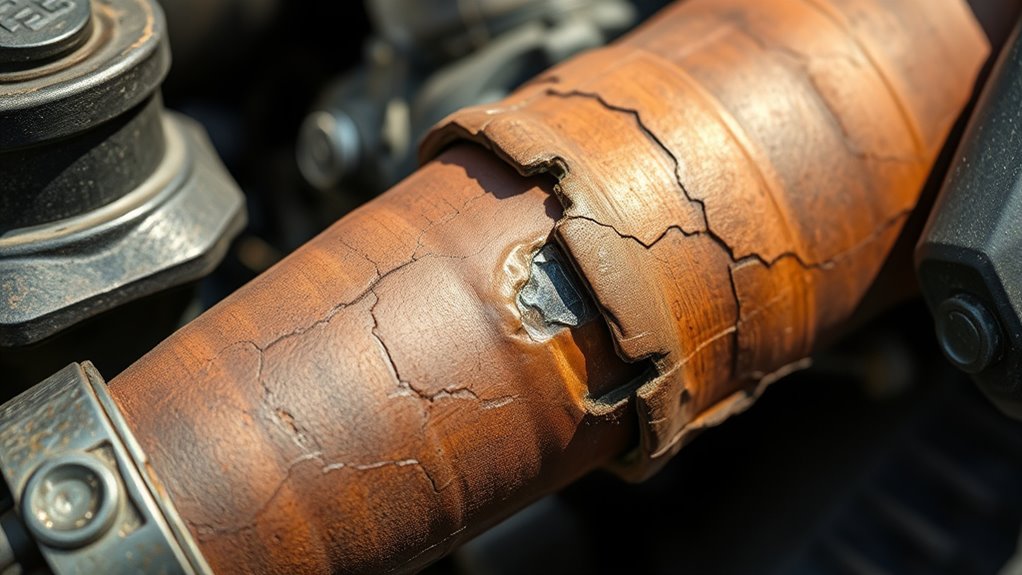
Start by inspecting your cooling hoses for any leaks or cracks that could hinder coolant flow. If you notice blockages or buildup, clear them out to make certain of proper circulation. When hoses are damaged or heavily worn, replace them promptly to prevent overheating issues.
Check for Leaks or Cracks
To prevent engine overheating caused by cooling system issues, you need to inspect hoses for leaks or cracks regularly. Carefully examine all radiator and coolant hoses for signs of wear, such as soft spots, bulges, or cracks. Look for coolant leaks at hose connections, clamps, and along the hose length—wet spots, stains, or residue indicate leaks. Cracks or splits in the hoses can cause coolant loss and reduce circulation efficiency. If you spot any damage, replace the affected hoses immediately to maintain proper coolant flow. Tighten loose clamps and ensure all connections are secure. Regular inspections help prevent sudden failures that can lead to overheating, saving you from costly repairs and engine damage.
Clear Blockages Regularly
Have you checked your cooling hoses lately? Damaged or blocked hoses can markedly hinder coolant flow, causing your engine to overheat. Inspect them closely for cracks, leaks, or swelling—any sign of deterioration means they’re not functioning properly. Also, look for blockages caused by dirt, debris, or mineral buildup inside the hoses. These obstructions restrict coolant movement, reducing heat transfer and increasing engine temperature. Flex and feel the hoses for stiffness or soft spots; both indicate potential problems. If you find any damage or blockage, clean or repair the hoses promptly. Ensuring your hoses are in good condition helps maintain proper coolant circulation, preventing overheating and keeping your engine running smoothly. Regular inspections are key to avoiding costly repairs down the line.
Replace Damaged Hoses
Inspecting and repairing damaged or blocked cooling hoses is crucial to maintaining your engine’s cooling efficiency. Worn, cracked, or clogged hoses restrict coolant flow, causing heat buildup. Regularly check hoses for signs of wear, such as bulges, leaks, or brittleness. If you notice any damage, replace the hoses promptly to prevent coolant leaks and overheating. Use a screwdriver or pliers to disconnect the hoses carefully, and ensure the new ones fit securely to avoid leaks. Also, inspect the clamps and fittings, replacing any corroded or loose components. Properly maintained hoses ensure smooth coolant circulation, helping your engine stay within the ideal temperature range. Don’t overlook this simple step—it’s crucial for preventing overheating and prolonging your engine’s lifespan.
Maintain Proper Oil Levels and Quality for Heat Dissipation
Maintaining proper oil levels and guaranteeing oil quality are essential for effective heat dissipation in your engine. When oil levels are low, it can’t absorb or transfer heat efficiently, leading to higher engine temperatures. Regularly check your oil level using the dipstick and top it off with the correct type if needed. Using clean, high-quality oil ensures ideal lubrication and heat regulation. Over time, oil can degrade or become contaminated, reducing its ability to dissipate heat. Change your oil according to the manufacturer’s schedule and use filters to remove debris. Proper oil management minimizes internal friction and heat buildup, helping your engine stay cool even during demanding conditions. Keep an eye on oil levels and quality to prevent overheating and prolong engine life.
Inspect and Service the Thermostat for Accurate Temperature Control
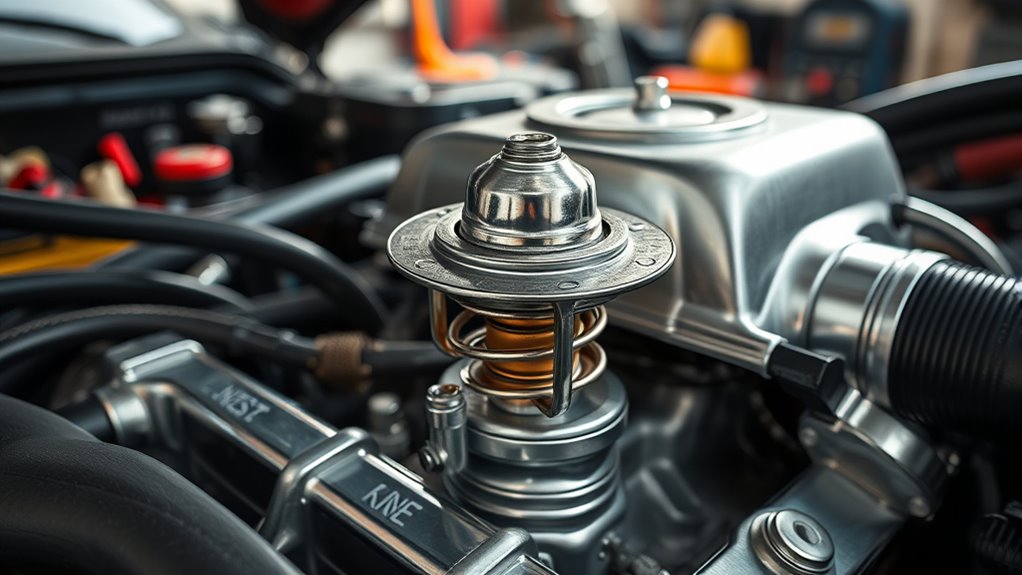
A malfunctioning thermostat can cause significant overheating issues, so it’s essential to verify its operation regularly. Start by inspecting the thermostat for signs of sticking or damage—look for corrosion, leaks, or corrosion around the housing. When the engine is cold, remove the thermostat and check if it opens when heated in hot water. If it doesn’t open or opens too slowly, replace it immediately. A thermostat stuck closed prevents coolant from circulating properly, trapping heat in the engine. Conversely, a stuck-open thermostat causes the engine to run too cool, affecting efficiency. Regularly servicing and replacing a faulty thermostat ensures accurate temperature regulation, preventing overheating and maintaining ideal engine performance. Proper thermostat function is critical for consistent cooling system operation.
Check the Water Pump and Replace if Malfunctioning
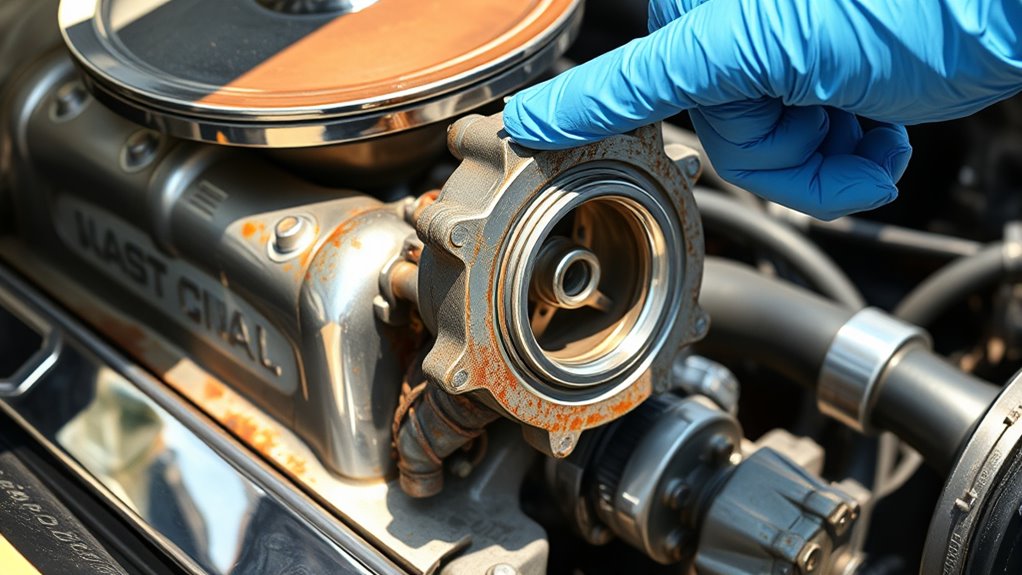
Since the water pump plays a crucial role in circulating coolant through the engine and radiator, any malfunction can quickly lead to overheating, so it’s necessary to check its condition regularly. A faulty pump can cause coolant flow issues, leading to hot spots and engine damage. When inspecting the pump, look for signs like leaks, unusual noises, or worn impeller blades. If you notice:
- Coolant leaks around the pump housing or gasket
- Grinding or whining sounds during operation
- Visible corrosion or damage to the impeller
it’s time to replace the pump. A malfunctioning water pump reduces coolant flow, preventing heat from dissipating properly. Installing a new OEM part ensures the cooling system functions correctly, helping prevent overheating and prolonging your engine’s life.
Use Correct Coolant Mixture and Prevent Contamination
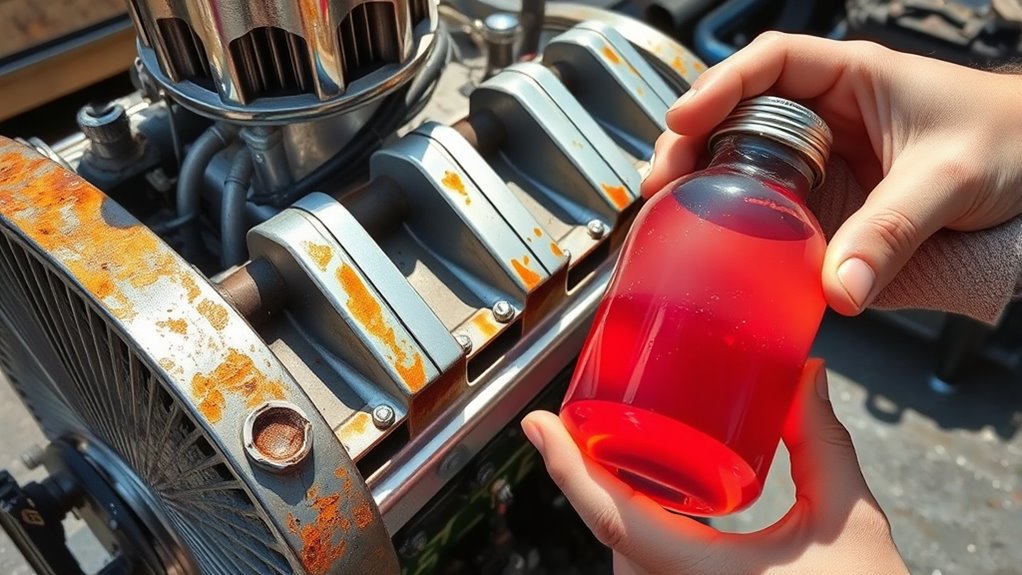
Using the correct coolant mixture is essential for ideal engine temperature regulation because improper ratios can reduce heat transfer efficiency and lead to overheating. You should always mix coolant and water according to the manufacturer’s recommendations, typically a 50/50 ratio, to guarantee maximum cooling performance. Avoid using plain water alone, which can cause corrosion and boiling, or pure coolant, which may not circulate properly. Keep an eye out for contamination, such as oil, dirt, or rust, which can impair coolant’s ability to absorb heat. Regularly check coolant levels and condition, and flush the system periodically to remove debris. Preventing contamination and maintaining the proper mixture helps your engine stay cool, protects components, and reduces the risk of overheating.
Frequently Asked Questions
How Can I Tell if My Engine Is Overheating Due to Airflow Issues?
You can tell your engine is overheating due to airflow issues if it runs hotter than usual, especially at low speeds or in hot weather. Notice if the engine feels excessively hot to touch or if the temperature gauge rises rapidly. Check for blocked or dirty air filters, and inspect fins on the engine for debris or damage. Reduced cooling efficiency usually indicates airflow problems causing overheating.
What Are Signs of a Clogged Air Filter Causing Engine Overheating?
Think of your air filter like a pair of lungs; when they’re clogged, breathing becomes difficult. Signs of a clogged air filter causing overheating include engine sluggishness, reduced power, and poor acceleration. You might notice black soot or debris around the filter. If the engine runs hotter than usual, stalls, or struggles under load, it’s time to check and replace the filter. Regular maintenance keeps airflow smooth and prevents overheating.
How Often Should Cooling Fans Be Checked for Proper Operation?
You should check your cooling fans at least once a month to guarantee they’re working properly. Turn on your engine and observe the fan’s operation, especially when the engine reaches operating temperature. Listen for unusual noises or signs of failure, like the fan not activating. Regular inspections help prevent overheating by catching issues early, and if you notice any problems, replace or repair the fan promptly to keep your engine cool.
Can a Faulty Thermostat Cause Air-Cooled Engine Overheating?
A faulty thermostat can cause overheating in an air-cooled engine if it sticks closed, blocking airflow and trapping heat inside the engine. This prevents proper temperature regulation, leading to excessive heat buildup. You should replace a malfunctioning thermostat promptly to restore normal airflow and cooling. Regular inspection and maintenance of your cooling system ensure the thermostat operates correctly, helping prevent overheating and protecting your engine from damage.
What Coolant Mixture Is Best for Preventing Overheating in Air-Cooled Engines?
In the days of chivalry, a proper mix of coolant is essential. For preventing overheating, you should use a 50/50 mixture of water and antifreeze. This blend provides excellent heat transfer, prevents freezing, and guards against corrosion. Avoid pure water or overly concentrated antifreeze, as they can impair cooling efficiency. Regularly check and top off your coolant to maintain peak performance and keep your air-cooled engine from overheating.
Conclusion
By paying close attention to airflow, filters, and cooling components, you can help your engine stay comfortably within its ideal temperature range. Regular maintenance acts like a gentle guiding hand, ensuring everything runs smoothly and efficiently. When you keep these simple steps in mind, you’ll find your engine hums along happily, avoiding unnecessary stress. A little care goes a long way in helping your engine enjoy a cooler, more trouble-free life.