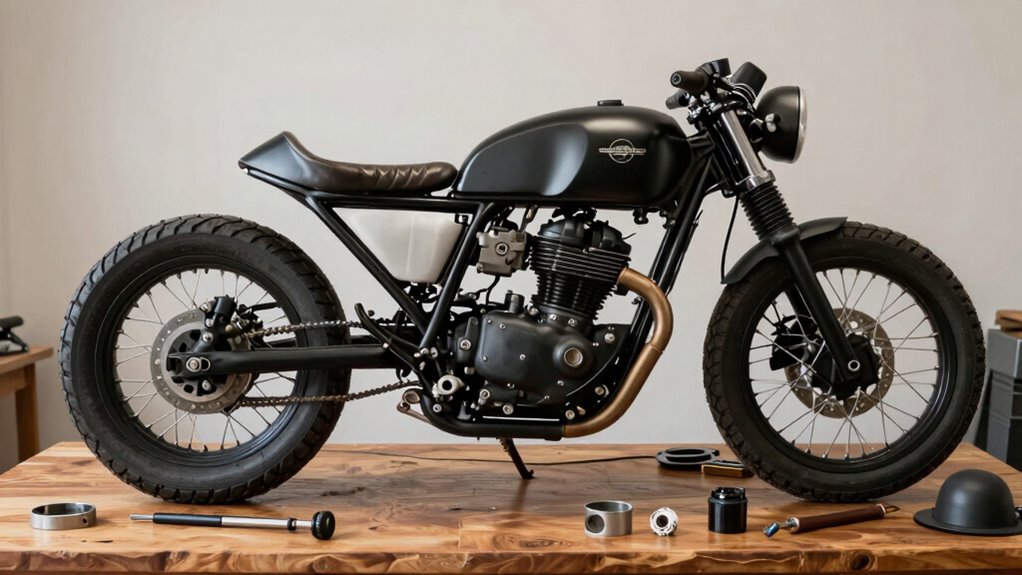

Start by choosing a popular vintage cruiser like a Harley Sportster or Honda Shadow, ensuring it runs well and has a solid frame. Remove excess parts like fenders, seats, and bulky components to achieve a minimalist look. Modify the frame by cutting and welding it for a hardtail setup, and adjust the suspension for better handling. Customize fenders and seats to match your style. Keep learning each step to build your perfect bobber.
Key Takeaways
- Select a suitable vintage cruiser like a Harley Sportster or Honda Shadow with a solid frame and good engine condition.
- Strip the bike of large, non-essential parts such as fenders, mufflers, and bulky seats to achieve a minimalist look.
- Modify the frame by shortening or converting it to a hardtail, ensuring proper alignment and handling.
- Customize the fenders and seat, opting for a solo seat and minimal rear fender for a classic bobber style.
- Finish with sanding, painting or coating, then reassemble the bike, adding vintage-inspired details and modern safety features.
Choosing Your Vintage Cruiser Base Bike

When selecting a vintage cruiser as your base bike, it’s important to choose a model with readily available parts and a solid foundation. Opt for popular models like Harley-Davidson Sportster, Honda Shadow, Kawasaki Vulcan, or Yamaha XV, since their parts are easier to find and affordable. Before buying, verify that the engine runs smoothly, the frame is free of cracks, and the wheels, brakes, and electrical components are functional. Inspect the frame’s condition, focusing on structural integrity and simplicity, which makes cutting and welding easier. Keep your budget in mind—aim for bikes around $1,000 or less. Make sure the bike includes essential hardware, lights, and sheet metal, as these will simplify your conversion process and help create a clean, classic bobber look. Additionally, considering the engine condition and compatibility with aftermarket parts can save you time and money during customization. It’s also beneficial to research the support network for your chosen model, as community resources can be invaluable for troubleshooting and upgrades. Ensuring the bike has a robust community can provide valuable guidance throughout your build. Building a solid foundation with a dependable repair history can greatly reduce unforeseen issues during your project. Moreover, understanding the vintage cruiser market can help you make informed purchasing decisions and find the best deals.
Stripping and Simplifying the Motorcycle

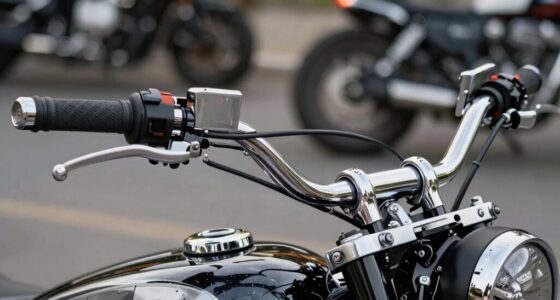
To achieve that classic bobber look, you’ll need to strip down your vintage cruiser by removing unnecessary parts. Start by taking off the large, stock fenders, mufflers, and bulky seats to reduce weight and create a minimalist style. Remove the front fender entirely or shorten it for a cleaner appearance. Detach the original handlebars, controls, and non-essential electrical components, saving only what’s necessary for safety and function. Clear away decorative emblems and decals for a sleeker look. During the teardown, keep core parts like the brakes, wheels, and frame mounts intact. This process simplifies the bike’s appearance, reduces weight, and sets the foundation for customizing your bobber’s unique, stripped-down aesthetic. Incorporating European cloud innovation principles can inspire modern upgrades that enhance the bike’s performance and security. Paying attention to body jewelry measurements and materials can also provide insights into selecting durable, lightweight components, contributing to a more efficient build. Additionally, focusing on essential safety features ensures the finished bike maintains reliability and rider confidence.
Modifying the Frame and Suspension
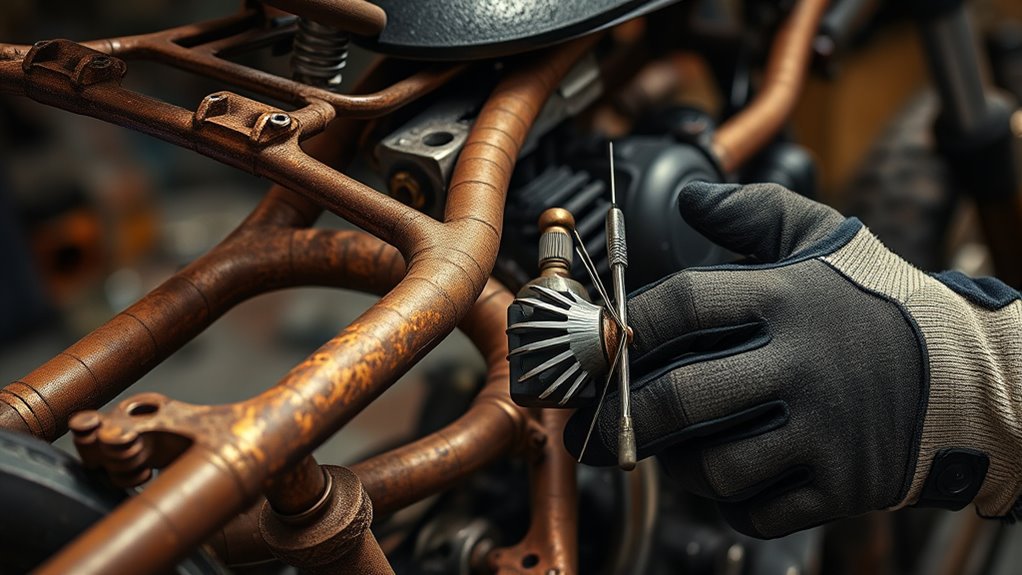
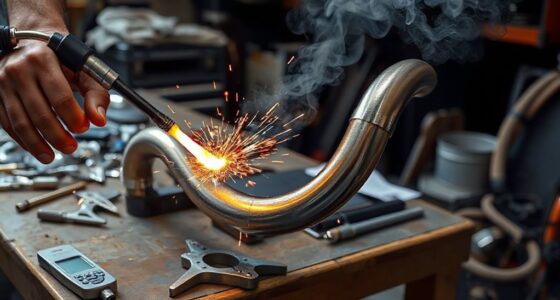
Modifying the frame and suspension is a crucial step in transforming your vintage cruiser into a classic bobber. You’ll want to cut and weld the frame to shorten it, often converting to a hardtail by removing the rear suspension for a clean, minimalist look. Using a jig ensures accurate alignment of the welds and wheel positioning. If you lack fabrication skills, consider pre-fabricated bobber frames or bolt-on hardtails. For handling and stance, adjust the front fork length by cutting down the tubes or changing the rake angle. You might also upgrade or modify suspension components to better suit the new geometry and weight distribution. This process creates a rigid, streamlined foundation that defines the iconic bobber style while maintaining bike stability and safety. Incorporating proper alignment techniques is essential to ensure safe handling and optimal performance of your custom build. Additionally, understanding frame geometry can help you achieve the desired riding experience and ensure your modifications are safe and effective, especially when considering handling characteristics and rider comfort. A thorough knowledge of net worth growth hacks can also inspire ways to fund your project or upgrade your bike with premium parts. Remember that vintage cruiser characteristics influence the overall look and feel of your bobber, so tailoring your modifications to preserve that classic aesthetic is important.
Customizing Fenders and Seat Setup
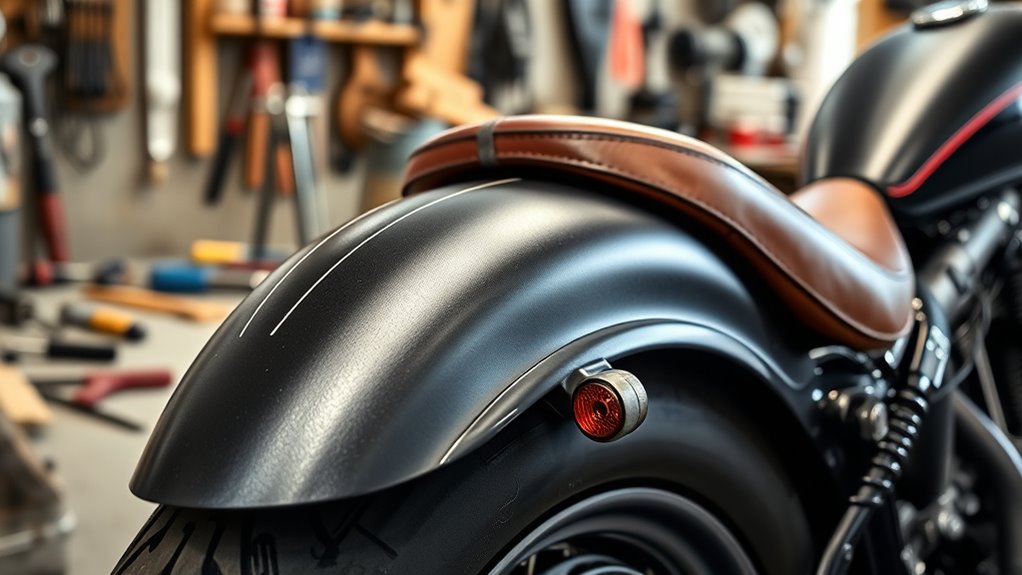
Ever wonder how to give your bobber that signature minimalist look? Start by shortening your rear fender with a hacksaw or electric jigsaw, then smooth and repaint or re-chrome it. Removing the rear fender entirely creates a stripped-down vibe, but if you prefer some coverage, keep it minimal. For the front, consider removing the fender completely or replacing it with a slim, simple piece. Next, swap out your stock seat for a solo or bobber-style seat, mounting it with springs or weld-on brackets for a clean, low profile. You can also customize the seat by reupholstering an existing one or fabricating a new one for authentic detail. Make sure the seat is securely mounted, keeping the overall low and sleek aesthetic that defines a classic bobber. Additionally, exploring customizing fenders and seat setup can help perfect your bike’s look and functionality. For an authentic touch, researching vintage cruiser styles can provide inspiration for your build.
Final Assembly, Painting, and Finishing Touches
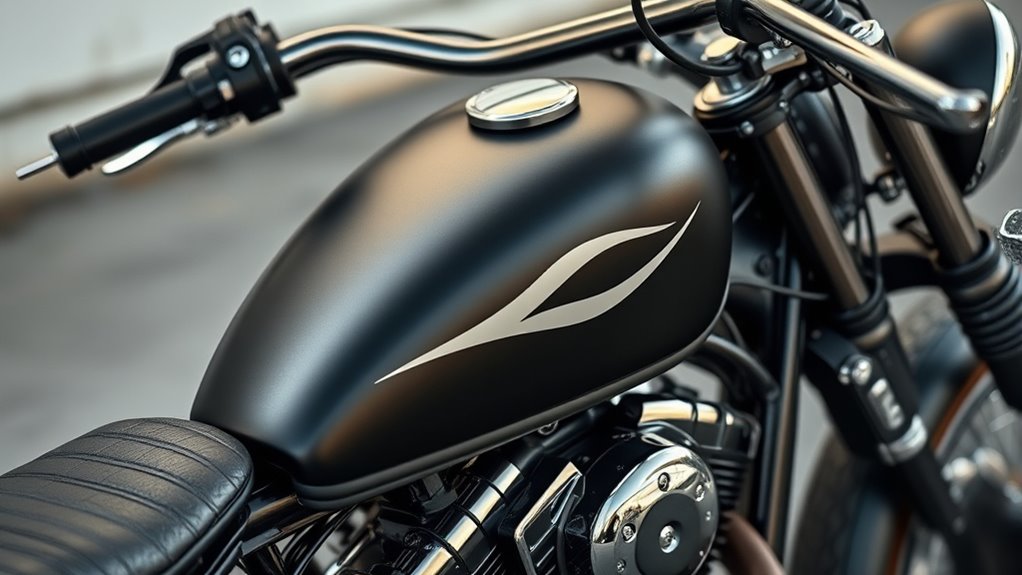
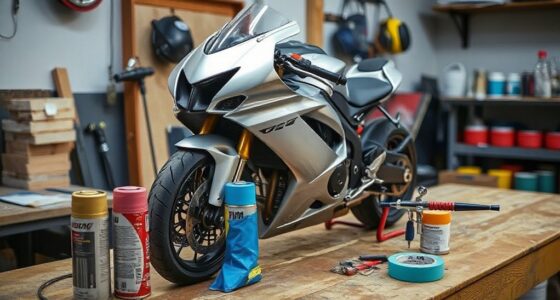
Once you’ve completed the frame modifications and installed your custom parts, it’s time to focus on final assembly, painting, and adding those finishing touches that bring your bobber together. Start by sanding the frame, tank, and fenders for a smooth surface, then apply high-quality paint or powder coating to achieve your desired look. Consider hand-painting logos or custom designs for a personal touch. When reassembling, ensure all components—engine, wheels, exhaust, and electrics—are properly installed and secure. Double-check that brakes, controls, and suspension are functioning safely. To enhance the aesthetic, you can:
- Add polished or matte paint finishes
- Install custom grips and handlebar accessories
- Attach vintage-style lights and minimal wiring
- Apply protective coatings or decals for durability and design
Additionally, incorporating smart lighting elements can add a modern touch while improving visibility and style. Remember to protective coatings to preserve your paintwork and extend the durability of your custom finish. Regular maintenance of your electrical components and ensuring proper waterproofing will help keep your bobber in top condition for years to come. Incorporating waterproofing techniques during assembly can further defend your bike against environmental damage, especially when combined with advanced protective coatings to ensure longevity.
Frequently Asked Questions
What Safety Precautions Should I Take During Welding and Cutting?
You should always wear safety gear like gloves, goggles, and a welding helmet to protect your eyes and skin from sparks and UV rays. Make certain proper ventilation to avoid inhaling fumes, and keep a fire extinguisher nearby. Double-check your equipment for damage or leaks before starting. Keep your workspace clear of flammable materials, and work in a well-lit, stable environment to prevent accidents during cutting and welding.
How Do I Ensure the Bike Remains Street-Legal After Modifications?
Think of your bike as a living story—keep the chapters of legality intact. To stay street-legal, you need proper lighting, mirrors, and a functioning horn. Make sure your tires are compliant, brakes work smoothly, and emissions meet local standards. Regularly check your modifications against regulations; it’s like tuning a finely crafted instrument. This way, your bobber isn’t just a work of art but also a trustworthy companion on the open road.
Can I Customize the Wiring Harness for a Cleaner Look?
Yes, you can customize the wiring harness for a cleaner look. Start by removing unnecessary wires and components, then re-route the remaining wiring along the frame using zip ties or loom covers to hide them. Use a simplified or custom-made harness designed for bobbers, and consider installing minimalist or integrated lighting. Keep safety in mind by ensuring all connections are secure, protected, and compliant with street-legal standards.
What Tools Are Essential for Frame Modifications and Fender Cutting?
Think of your tools as the sculptor’s chisel, shaping your vision into reality. You’ll need a hacksaw or electric jigsaw for fender cutting, an angle grinder for precise metal removal, and a drill with various bits for making holes or mounting hardware. A welding machine is essential for frame modifications, while clamps and a measuring tape guarantee accuracy. Safety gear like gloves and goggles protect you during this transformative process.
How Do I Choose the Best Paint or Finishing Method for Durability?
You should choose high-temperature, durable paints or powder coating for long-lasting finishes. Opt for ceramic or ceramic-based paints to withstand heat and weather exposure. Prep the surface thoroughly by sanding and cleaning before applying. Use multiple thin coats for even coverage, and consider clear topcoats for added protection. These methods resist chipping, fading, and rust, ensuring your bobber remains eye-catching and durable for many rides ahead.
Conclusion
Now, you’ve transformed your vintage cruiser into a jaw-dropping bobber that’s ready to turn heads and steal the show. Every cut, weld, and paint stroke has crafted a masterpiece that screams badass. From the sleek frame to the minimalist design, your bike’s now a legend in the making. Get ready to hit the road and feel unstoppable—because this bobber isn’t just a bike, it’s a roaring beast waiting to conquer every mile ahead!